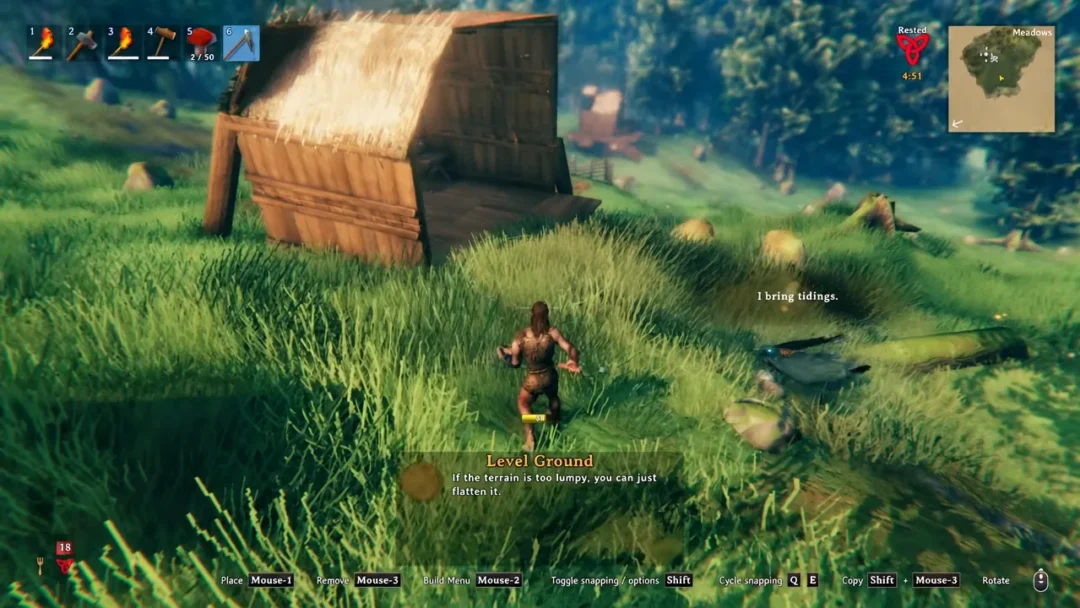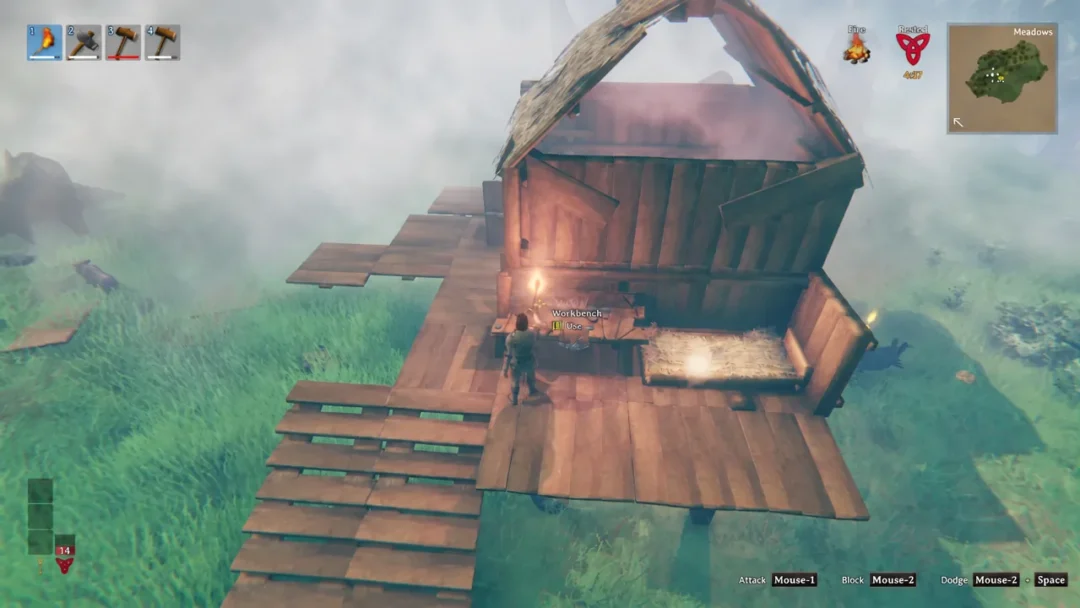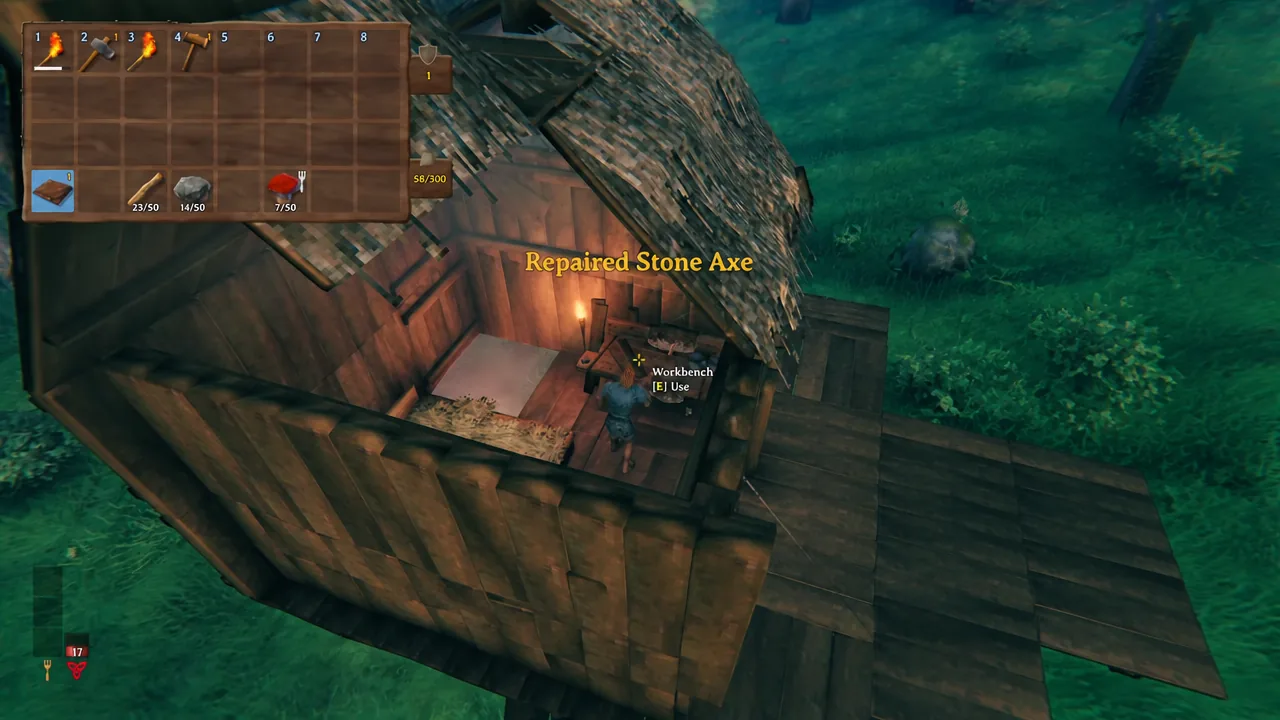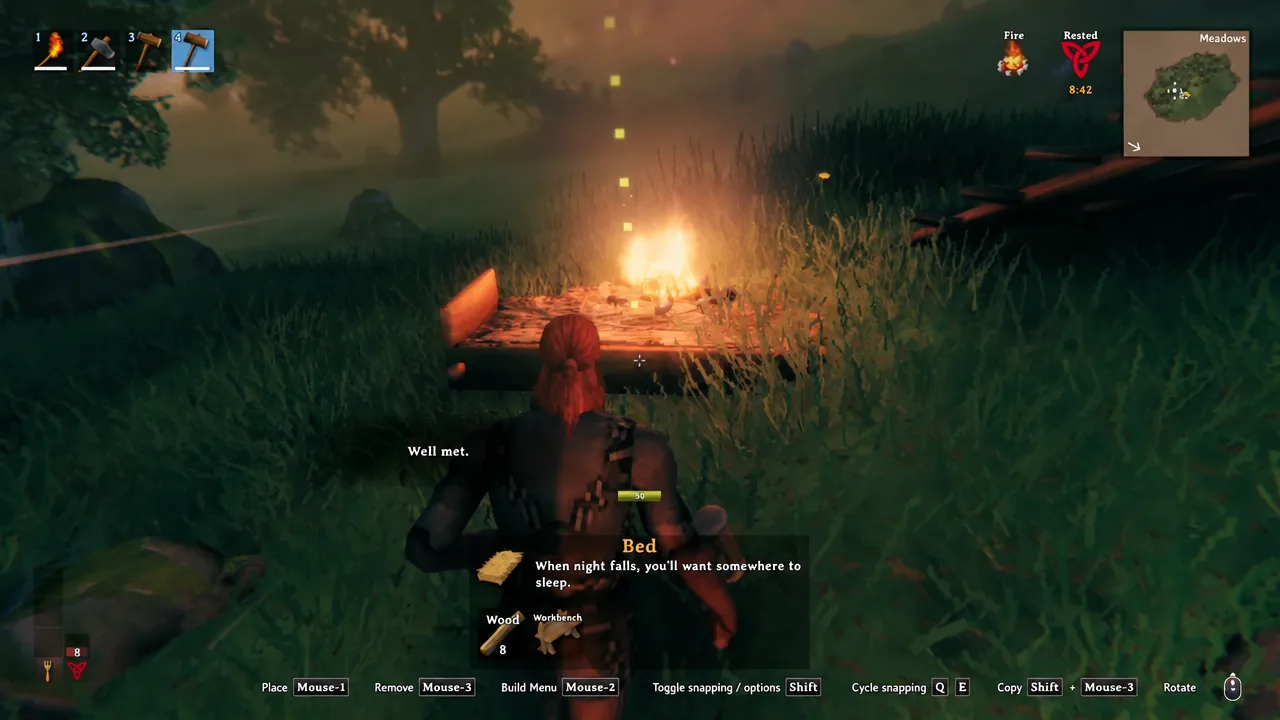
A bed is the cheapest structure in Valheim that changes how you play. It skips the night, it sets your respawn point, and it quietly fast-forwards every smelter and kiln you left running. The catch is that Valheim checks a short list of conditions before it lets your Viking lie down, and failing any one of them produces a refusal message instead of a morning.
Quick answer: Place a bed (8 wood) inside a structure with a roof and at least 80 percent cover, put a campfire on bare ground nearby, press E on the bed to claim it, then press E again once it is afternoon or night, with no enemies around and your character dry.
Bed materials and crafting requirements in Valheim
Everything here comes from the first hour of a fresh world. You need a hammer to open the build menu, a workbench in range to enable the furniture pieces, and enough wood for the bed itself. Stone comes from the small rocks scattered across the Meadows.
| Item | Cost | Why you need it |
|---|---|---|
| Hammer | Wood x3, Stone x2 | Opens the build menu for every structure |
| Workbench | Wood x10 | Must be in range for the bed to be buildable |
| Bed | Wood x8 | The spawn point and sleeping spot itself |
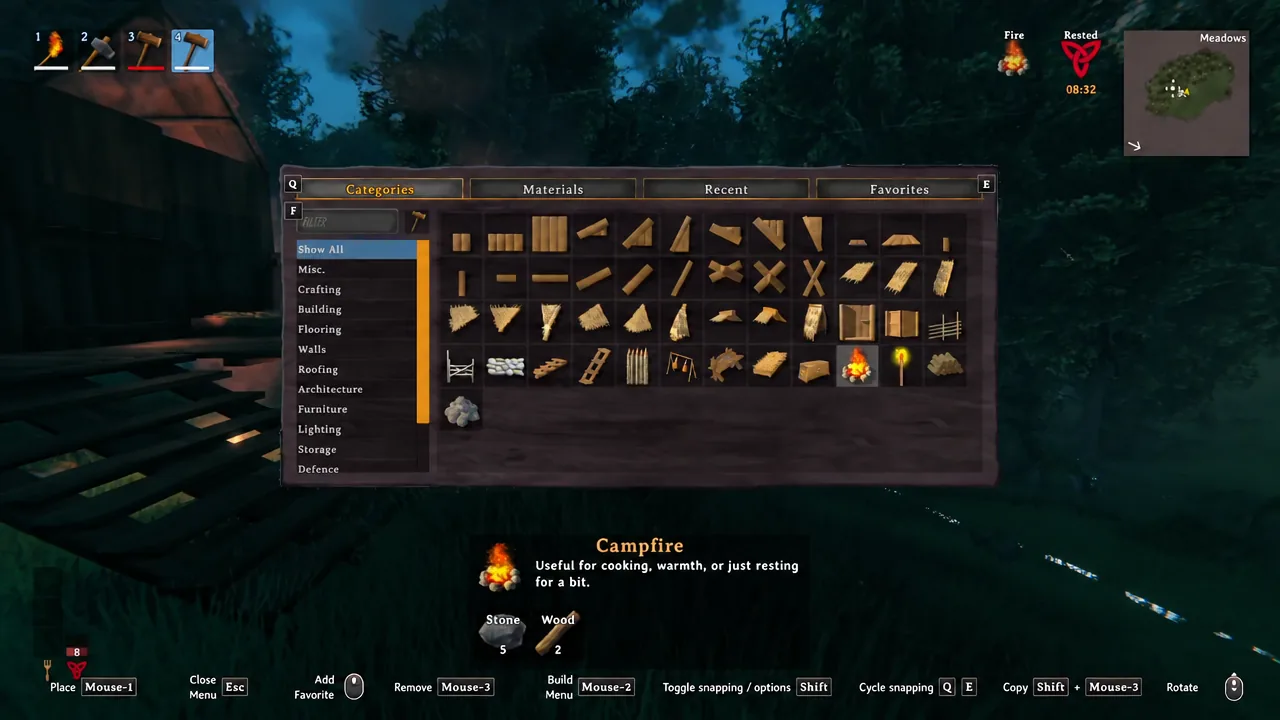
| Campfire | Stone x5, Wood x2 | Satisfies the fire requirement for sleeping |
The bed occupies roughly a 2×4 footprint, so leave a clear stretch of floor for it. It also takes rain damage, which is another reason it belongs under a solid roof rather than a half-finished frame.
How to place and claim a bed
Once claimed, that bed becomes your respawn point, and another player cannot take it from you unless the bed is destroyed and rebuilt.
The five sleep conditions Valheim checks
Claiming a bed and sleeping in it are separate actions with separate rules. All five conditions below must be true at the same moment, and the game will simply tell you that you cannot sleep right now if any of them is missing.
| Condition | How to satisfy it |
|---|---|
| Time of day | It must be afternoon or night; mornings are refused outright |
| No enemies nearby | Clear or lose any hostile mobs that have wandered near the base |
| Roof and 80 percent cover | Close the walls and roof until the Shelter icon appears in your status bar |
| Fire nearby | A lit campfire, bonfire, or hearth within range of the bed |
| Not wet | Stand by the fire until the wet status wears off |
You can verify most of this without touching the bed. When the Shelter and Fire icons are both showing in the HUD and the Wet icon is gone, the only variable left is the clock and whatever is prowling outside.
Campfire placement: Why fire won’t sit on a wooden floor
This is where most first houses fail. Campfires, bonfires, and hearths can only be placed on natural ground such as dirt or stone. Drop wooden floor tiles across the whole interior and there is nowhere left to light a fire, which means no sleeping.
The fix is to leave a patch of bare ground inside the house and build the campfire there, with the walls and roof going up around it. The fire’s range is a sphere, so a bed placed slightly above or below the campfire still counts as long as it falls inside that radius.
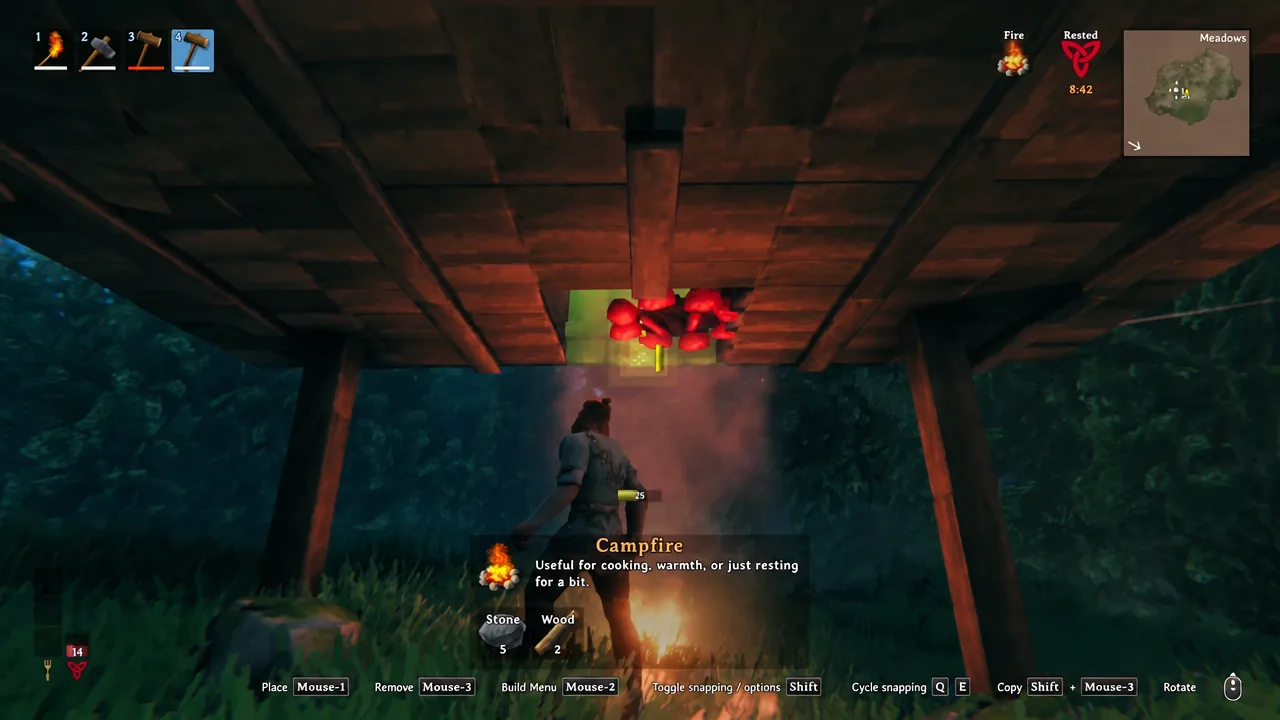
If you have already tiled the room, pick up or skip the floor pieces immediately around the fire pit. Trying to set a campfire on top of a wood floor square returns an invalid placement every time, no matter how much room is around it.

Note: torches do not count as fire for sleeping purposes, however useful they are for light and warmth on the road. Only a campfire, bonfire, or hearth satisfies the requirement.
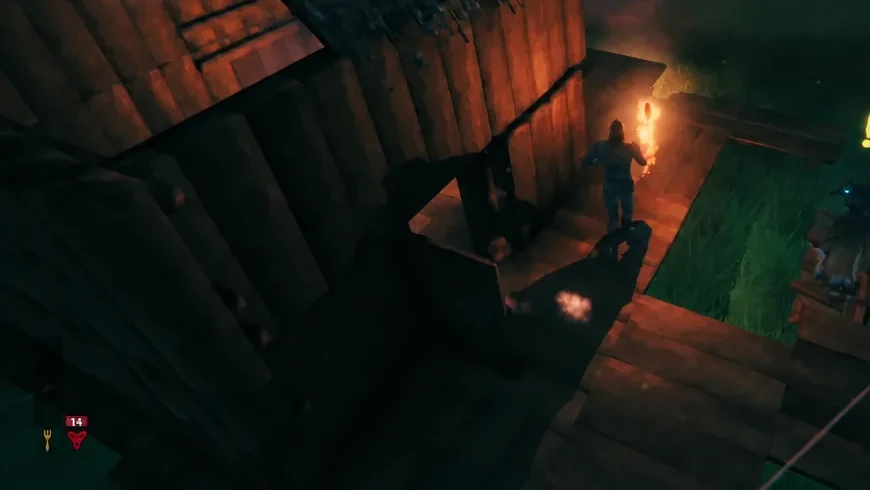
One more detail worth planning around: an indoor fire needs somewhere for smoke to escape, so leave a gap or vent in the roof above it.
What happens while you sleep
Sleeping jumps the clock to the following morning, and the world runs in fast-forward while it happens. Smelters and other processing stations keep working through the skipped hours, so loading them up at sunset and then going to bed is an efficient way to burn through a large pile of ore. Anything sitting on a cooking station or in a stone oven will be ruined by the same fast-forward, so pull your food off first.
The later you go to bed, the less time you skip. Dreams occasionally play on waking, and the bed adds 1 to your comfort level, which feeds into the duration of your Rested buff.
Tip: if a bed is built too close to the ceiling, you can occasionally wake up on the other side of the roof. Leave a little headroom above it.
Using beds as respawn points
The most recent bed you claimed is where you wake up after dying. That makes a bed the cheapest insurance policy in the game for any risky trip. Throw up a small sheltered hut near a burial chamber or a new biome, claim the bed inside it, and a death costs you a short walk instead of a full journey back from home base.
Claiming a new bed replaces the old one, so reclaim the bed at your main base when you are done exploring. If your claimed bed is destroyed and you then die, you respawn at the Sacrificial Stones instead.
Get the roof, the fire, and the timing right once, and the bed stops being a chore. It becomes the switch you flip at dusk to clear the night, keep the smelters humming, and lock in a safe place to come back to.