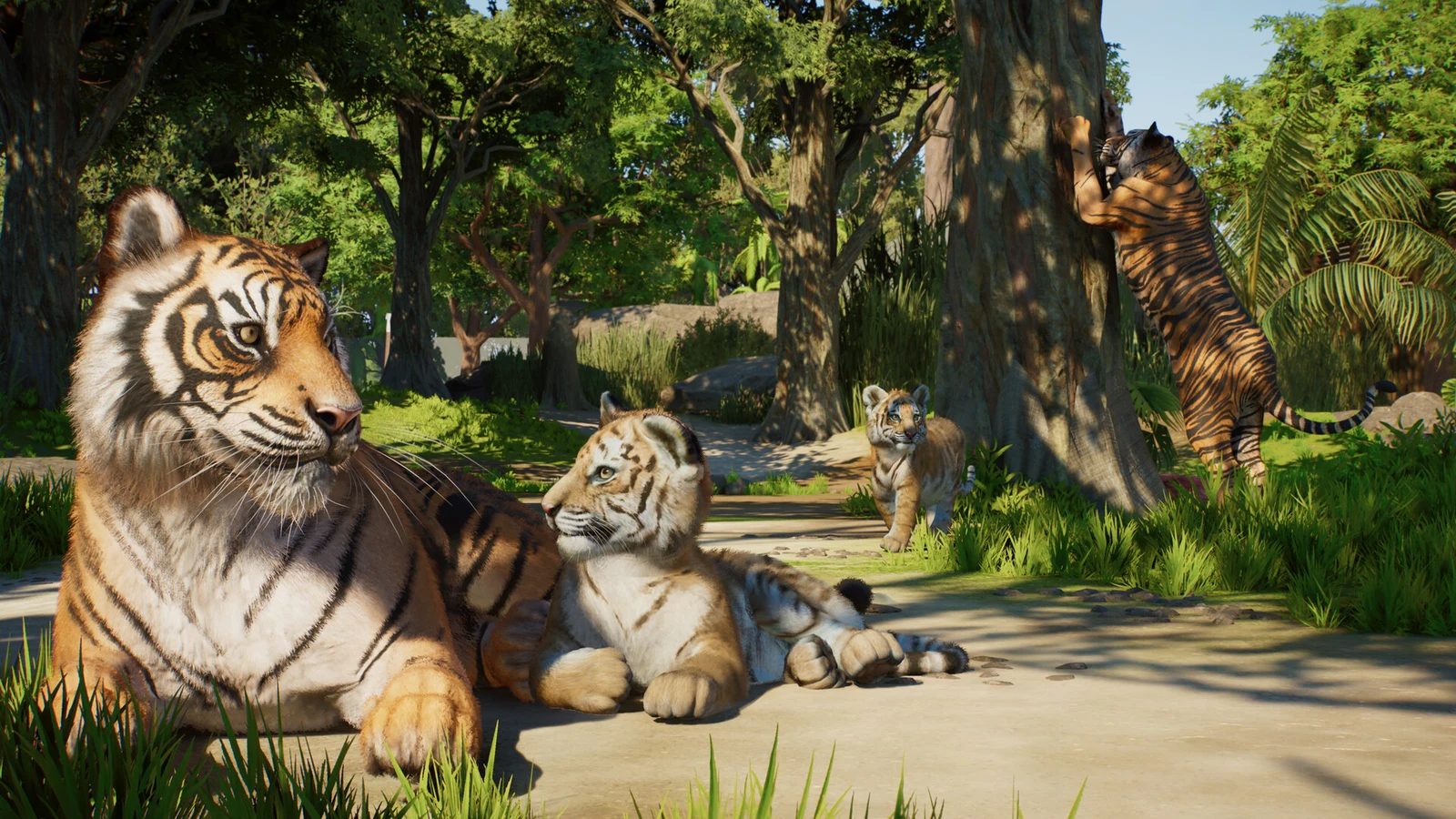
Growing a single-species group in Planet Zoo 2 does not require a breeding program. The trading catalog lists several individuals of the same species at once, so you can buy as many as you need and place them together in one habitat.
Quick answer: Open Trading & Storage, select the Trading tab, then page through the catalog and adopt each listing of the species you want.
Buy more of the same species from Animal Trading
The catalog does not limit you to one animal per species. The same species shows up across multiple entries, each a separate individual with its own price, maturity, and stats. A species like Springbok can appear eight or more times in a single market, which means you can assemble a whole group in one sitting.
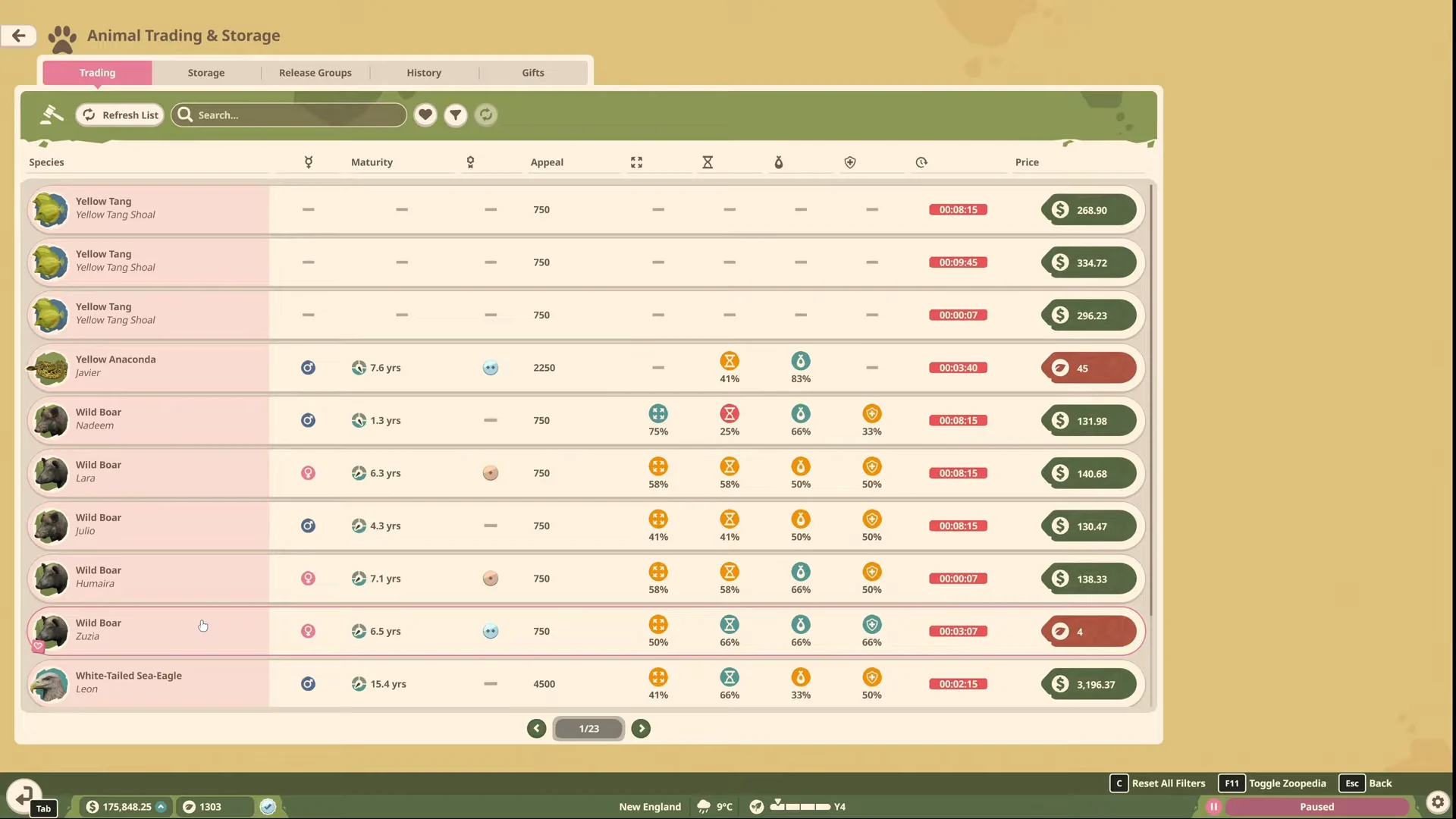
Check the Maturity and stat columns before adopting. Mixing in healthy adults of different ages and genetics gives you a stronger foundation if you later want the group to breed.
Requirements before adopting duplicates
A working Trade Centre must be linked to the path network at your current location for trading to work. If the Trading menu shows nothing or animals won’t leave storage, check that the Trade Centre is built and staff can reach it.
Space and welfare scale with group size. Adding more adults raises the amount of walking room, shelter, and other requirements the habitat has to meet, so check the species entry in the Zoopedia before you fill a page of listings into one enclosure.
- A Trade Centre built and connected to paths.
- Enough Cash or Conservation Credits for each individual.
- The species unlocked at your current Accreditation Tier.
- A habitat sized for the larger population.
Having the currency does not override an Accreditation lock. If a species shows as unavailable, raise your Accreditation Tier before it can be adopted.
Grow the group through breeding instead
Animals already in your zoo can produce new generations on their own, which turns a small starting pair into a larger group without returning to the market. This is the slower route, since it depends on age, welfare, genetics, species research, mating conditions, and whether contraception is switched off.
Give the habitat suitable breeding grounds to support it. Items such as Cup Nest – Large and Habitat Bedding – Medium Leaves let a species raise young in place. Breeding also feeds into conservation and trading, since healthy adults can later be released, moved between zoos, or sold.
Confirm the animals arrived
Each adoption drops the individual into Animal Storage first, so a purchase that works shows the new animal there before it reaches the habitat. Once you assign it and a staff member completes the delivery, the extra individual appears inside the enclosure alongside the others, and the habitat’s population count ticks up to match the group you built.