
Skill levels in AION 2 are the difference between a story boss that takes four attempts and one that dies on the first. Every active and passive ability has its own level, its own damage numbers, and its own unlock conditions, and skill points are only the first of four things that push those numbers up.
Quick answer: Open the main menu, pick Skills, select an ability under Mastery, and press the level-up button to spend a skill point. Points alone cap a skill at level 10.
Where skill levels are set: the Mastery tab
Press the main menu button in the top right of the HUD and choose Skills from the menu grid. The window opens on two tabs, Mastery and Stigma. Mastery is where your standard kit lives, split into Active abilities (the ones you slot on the action bar) and Passive abilities that work without being pressed.
Clicking any skill fills the right side of the window with its current level, damage range, cast time, cooldown, range, and weapon condition. The level-up button sits in the bottom right, next to your remaining skill point count and the circular reset button.
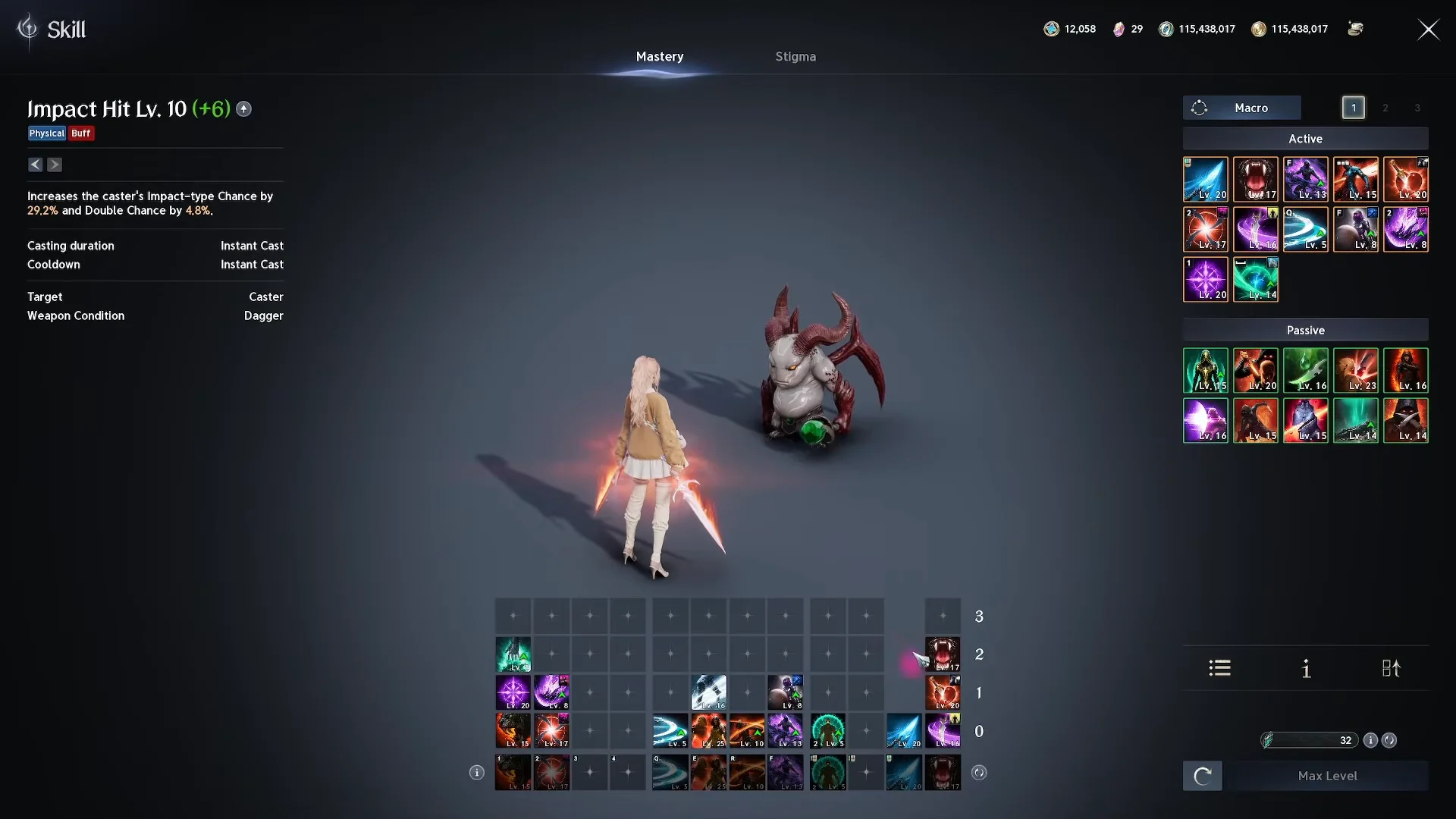
Spending skill points on an ability
The payoff is visible in the tooltip text. The Ranger’s Snipe, for example, scales its damage range on every rank while keeping its instant cast, 1s cooldown, 20m range, and 120 MP restore.
| Snipe level | Damage to a target within 20m |
|---|---|
| Lv. 1 | 77-91 |
| Lv. 2 | 91-117 |
| Lv. 3 | 109-143 |
| Lv. 4 | 126-150 |
| Lv. 5 | 150-154 |
Passives behave a little differently. They have no selectable effects to pick, so each rank simply raises the numbers already in the description. Concentrated Fire keeps its 50% trigger chance while its damage climbs from 80-83 at Lv. 1 to 123-126 at Lv. 3, and Wind Vigor stacks Max Stamina and a short Move Speed burst when you take a hit.
Character level gates on higher skill ranks
Having spare skill points does not guarantee the upgrade goes through. Individual ranks are locked behind your own character level, and the requirement is printed on the skill in plain text, such as “Reach Character Lv. 12” for Wind Vigor Lv. 2 or “Reach Character Lv. 13” for a higher Tempest Shot rank.
If a skill you rely on shows a level requirement one or two levels above you, bank the points instead of scattering them. Concentrating ranks into two core abilities produces more combat power than thin investment across six.
Specialty sockets at skill levels 8, 12, and 16
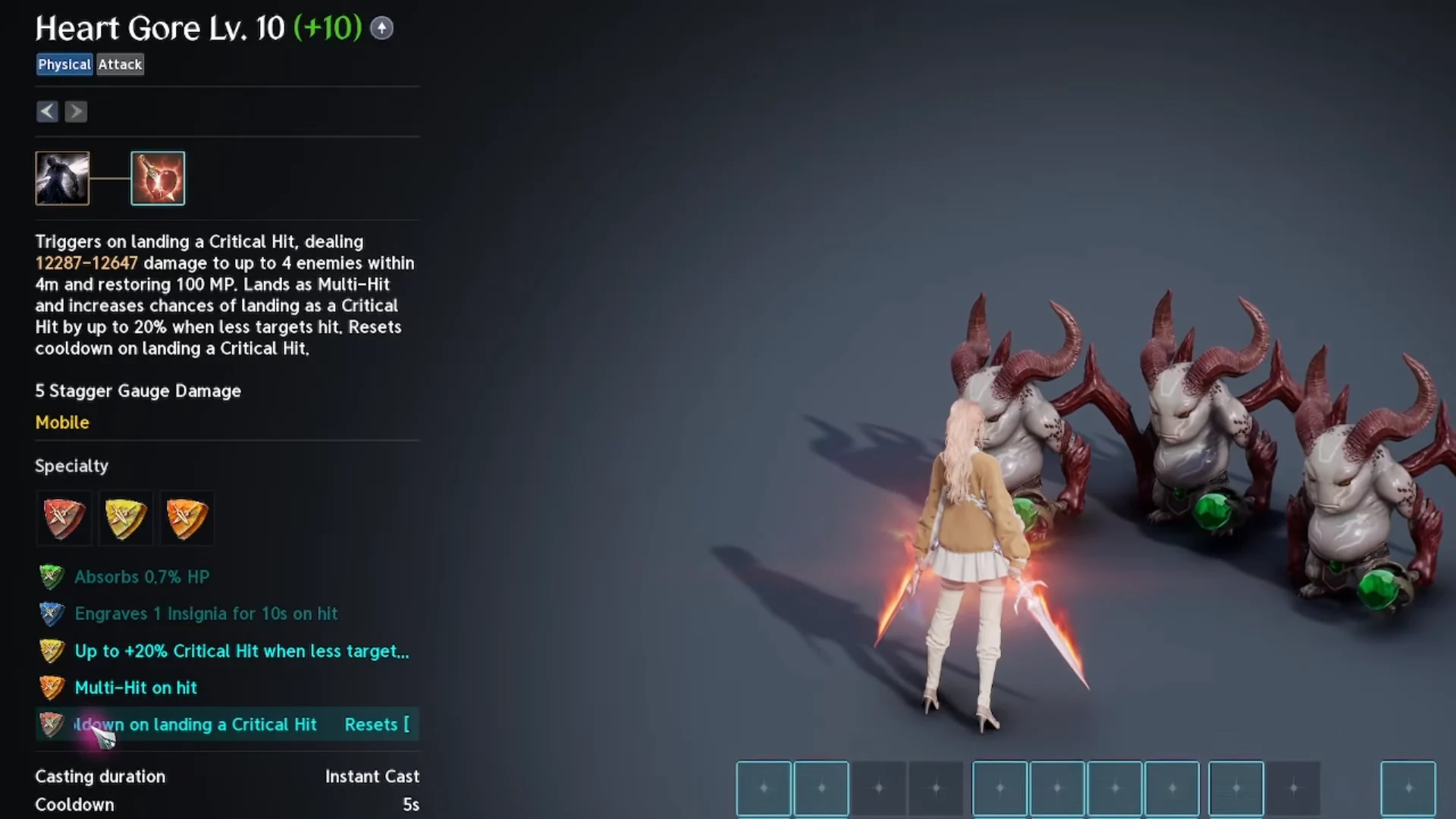
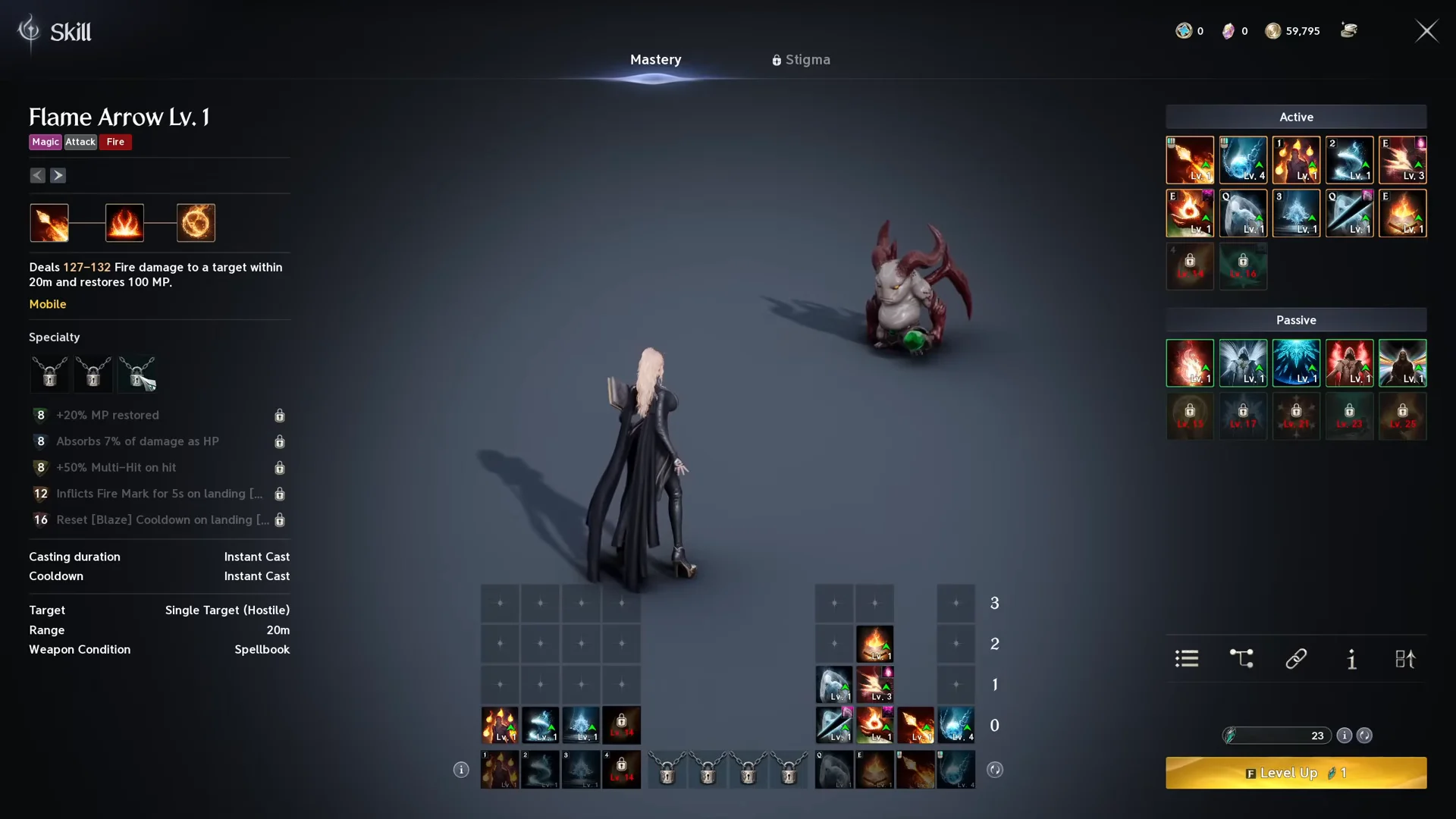
Active skills do not just gain damage. At set levels they unlock Specialty sockets, which are selectable effects that change how the ability plays. The first arrives at level 8, the second at level 12, and the third at level 16, with further slots available deeper into the track at level 20.
These effects are the real reason to push a skill high. Common examples include casting while moving, recovering HP from damage dealt, and cooldown resets tied to a condition, such as the Assassin’s Heart Gore refreshing its cooldown on a critical hit.
Mobility specialties matter most in solo story fights, where long cast animations lock you in place through a boss telegraph. A Sorcerer’s Firestorm that can be cast while moving removes that lock entirely, and every class has at least one sustain effect worth targeting for the same reason.
Pushing a skill past level 10
Since skill points stop at level 10, the level 12 and level 16 sockets can only be reached with outside sources. Three systems add levels on top of what you have already bought.
| Source | Currency or requirement | Effect on skill level |
|---|---|---|
| Skill points | Character levels, side content | Up to level 10 |
| Daevanion boards | Daevanion Crystals / points | Up to +4 levels |
| Arcana cards | Equipped cards | Rolled bonus levels |
| Gear soul bindings | Weapon, ring, armor rolls | Rolled bonus levels |
Daevanion boards
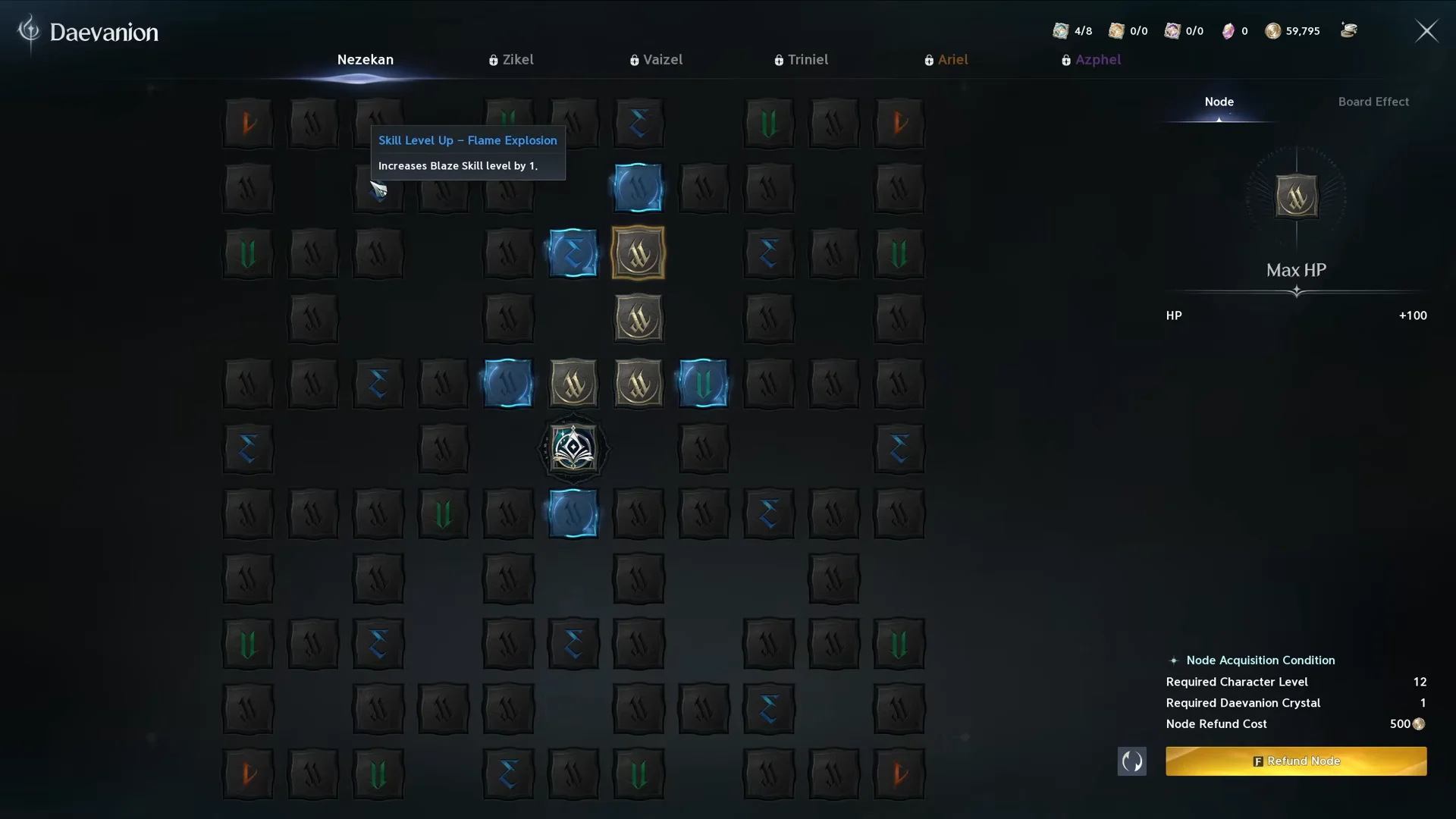
The Daevanion boards are constellation grids, spread across Nezekan, Zikel, Vaizel, and Triniel. Most nodes hand out raw stats such as HP, defense, critical damage, and cooldown reduction, but two node types matter here. Blue glyph nodes raise the level of an active ability, and green glyph nodes raise a passive. Together they can add up to four levels to a single skill.
That is the intended route from level 10 to level 12, and eventually 16, on your two most important damage skills. Nodes are unlocked with Daevanion Crystals earned from the exploration content below.
Arcana cards
Arcana is a late-game card system, and equipped cards can roll extra levels for named abilities. The bonus is tied to the card rather than the skill, so swapping cards moves those levels around. Arcana also awards skill points on its own.
Gear soul bindings
Equipment carries Soul Binding modifiers, and some of them are skill level rolls. Rings and weapons tend to roll active skill levels, while armor pieces roll passives. Check these before rebuilding a Daevanion board, because a weapon roll may already be covering the level you were about to pay for.
Where skill points and Daevanion Crystals come from
Skill points arrive automatically as your character levels, which makes main story quests the steady baseline. Beyond that, the supply comes from the optional content most players skip.
- Character level-ups, granted on their own
- Side story quests, which also pay out Daevanion points
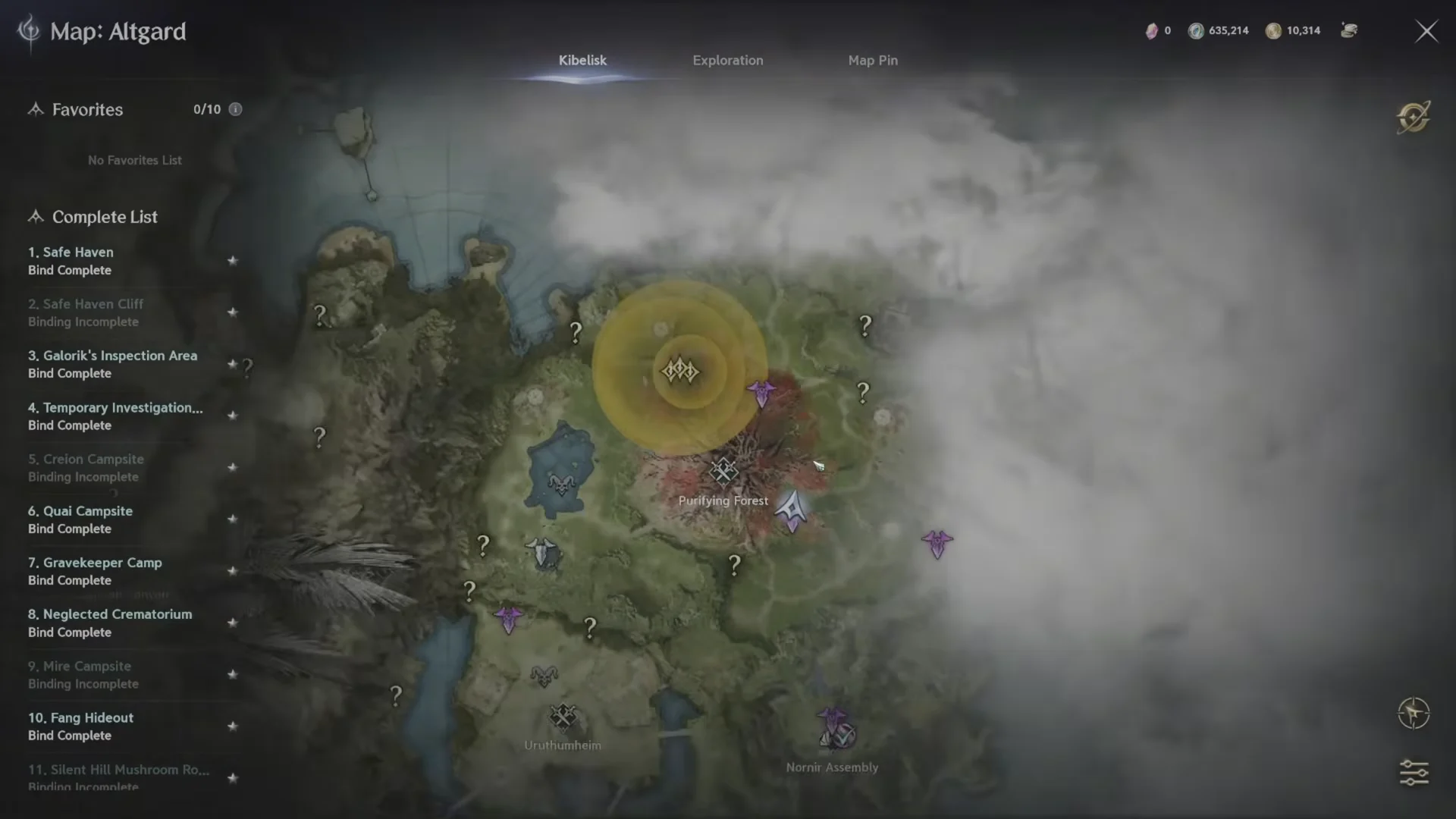
- Sealed Dungeons, marked as question marks on the map
- Strongholds in the same exploration layer
- The Arcana system in the late game
Side quests, Sealed Dungeons, and Strongholds scale to your level, so clearing a zone’s question marks as you pass through is no harder than returning at level 45. The exploration tab on the map tracks what you have finished in each region.
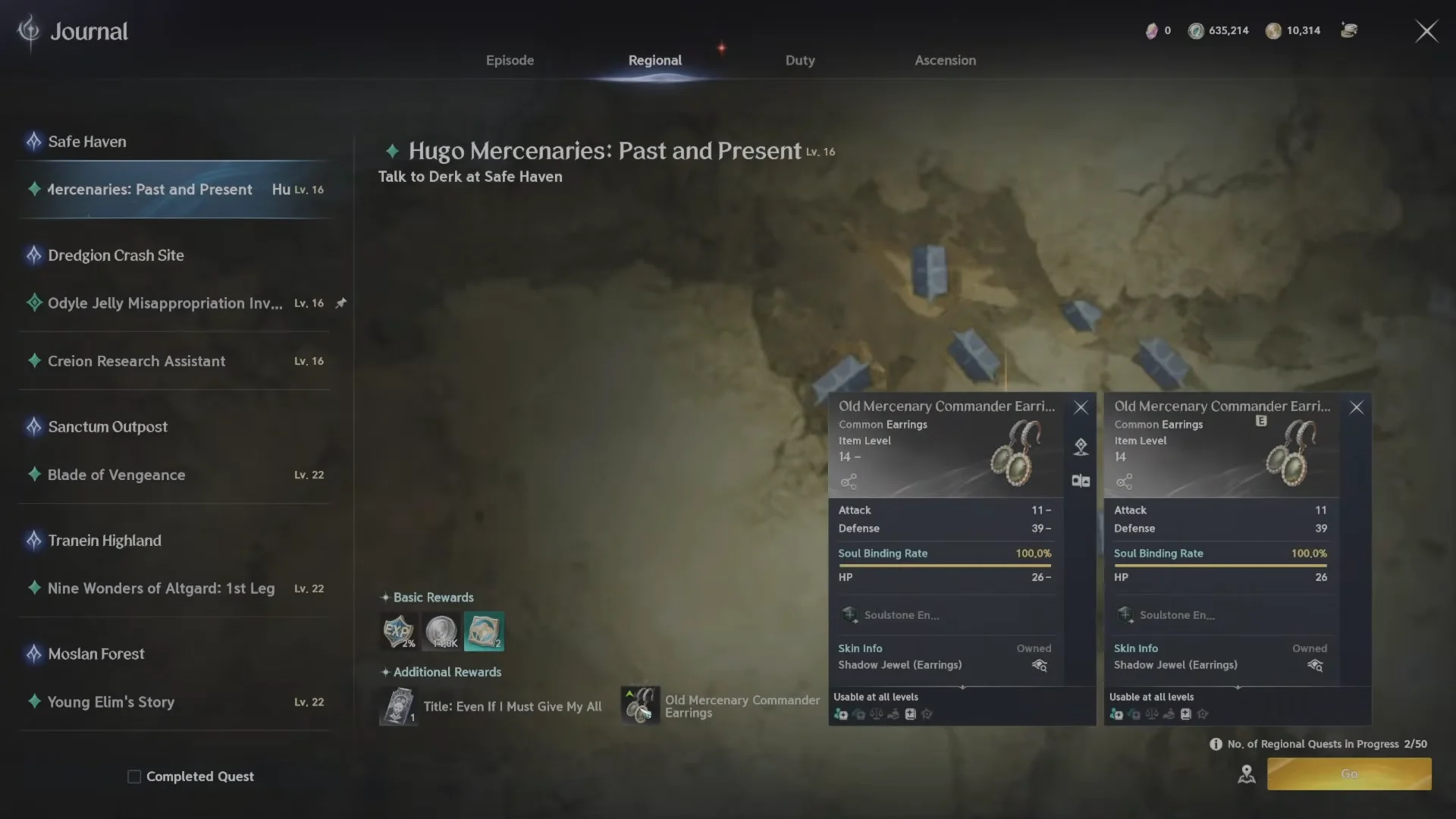
Regional quests in the Journal are the other reliable source. Entries like Hugo Mercenaries: Past and Present list their rewards up front, including equipment and the Daevanion Crystals you spend on board nodes.
Stigma skills use Stigma Shards, not skill points
The Stigma tab runs on a separate economy. Abilities there, such as Arrow Storm, Bow of Blessing, Ambush Kick, and Snare Shot for a Ranger, stay locked until you meet both conditions listed on the skill: reach Character Lv. 22 and complete the quest “The One Who Hears the Voice…”.
Once unlocked, you pick four stigmas to equip from a pool of 13 and level them with Stigma Shards rather than skill points, up to level 20. Shards are sold in the Abyss Trade Shop under the Growth tab, listed as Stigma Shard (Bound) and bought with Abyss Points.
Confirming a skill level actually changed
Two things update the moment a point is spent. The level in the skill’s name increments, so Snipe Lv. 2 becomes Snipe Lv. 3, and the numbers inside the description panel change with it. Compare the damage range before and after, or the stat line on a passive, and you have your confirmation.
For bonus levels, the skill still shows the total. If the Mastery panel reads higher than the 10 you could have bought with points, the extra levels are coming from your Daevanion nodes, Arcana cards, or gear rolls.
Resetting skills and reclaiming points
Resets are free and unlimited, so there is no reason to treat a build as permanent. Press the circular reset button beside the skill point counter and a window asks “Would you like to reset all skills?”, warning that all Skill Specialty effects will be deactivated and the current preset’s skills will be reset.
Confirm and every point you spent comes back at once. A message states how many you recovered, in the form “All skills have been reset. Acquired 4 Skill Point(s)”, and the skill list drops back to its base values.
A reset only refunds skill points. Levels granted by Daevanion nodes, Arcana cards, and gear are untouched, so those bonuses stay attached to whichever skills they were rolled for.
That makes experimenting cheap. Dump points into one skill to test a level 8 specialty, reset if the effect does not suit how you play, and save the more expensive Daevanion and Stigma Shard investment for the two or three abilities you actually press in every fight.