
Meteorites in Over the Hill don’t come out when you drive into them. Each one is lodged in the ground, and the only way to free it is with your winch and some steady pulling. A successful pull pays out Pebbles, the currency you spend on vehicle upgrades. How many you get depends on the rock’s size.
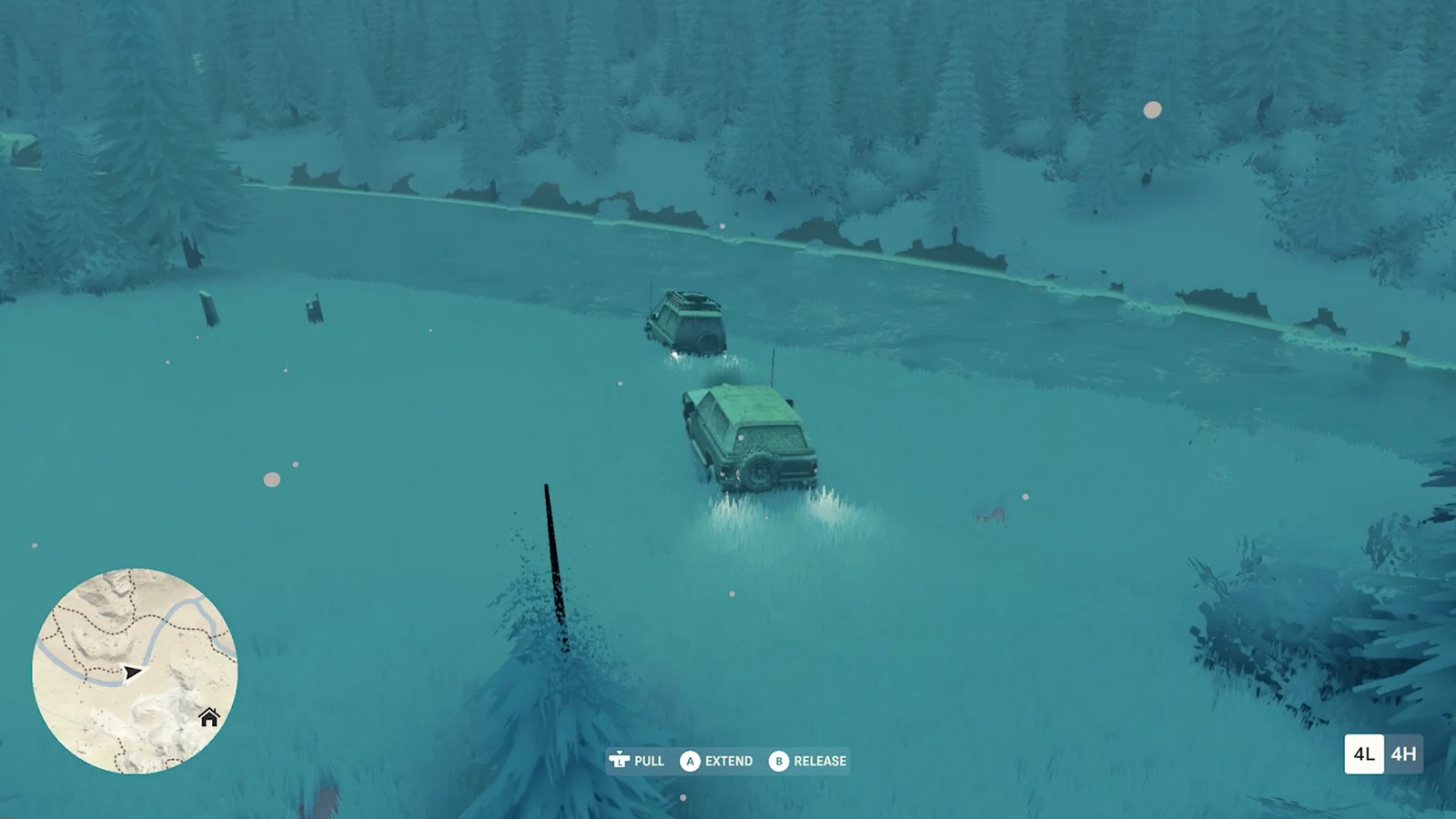
Quick answer: Connect your winch from the rear of your vehicle directly to the meteorite. Then hold the throttle and pull the winch at the same time while driving away until “METEORITE EXTRACTION COMPLETED” appears.
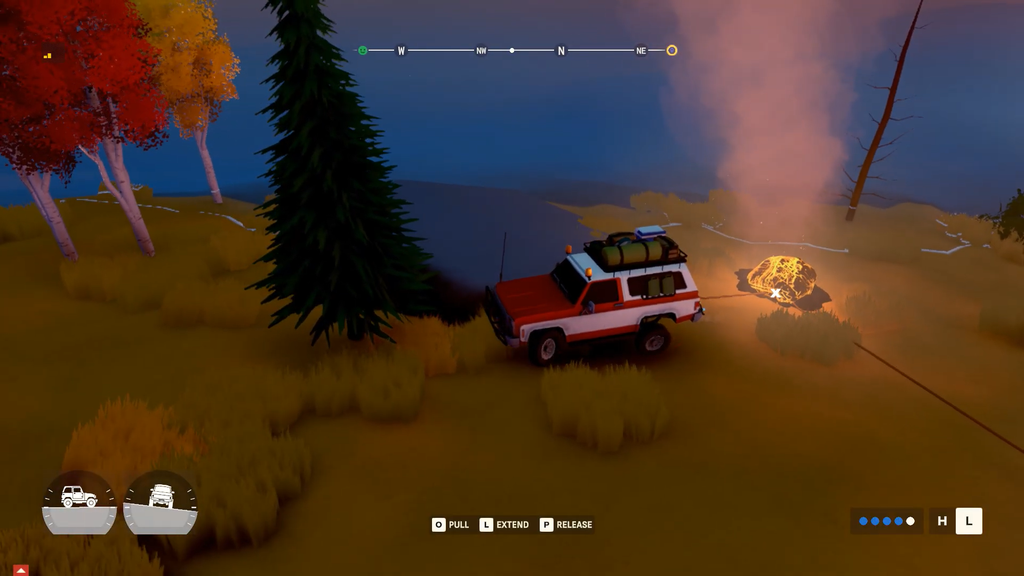
How to extract a meteorite with the winch
Q. Pressing the throttle after using the winch does not count as simultaneous input, so hold both controls together.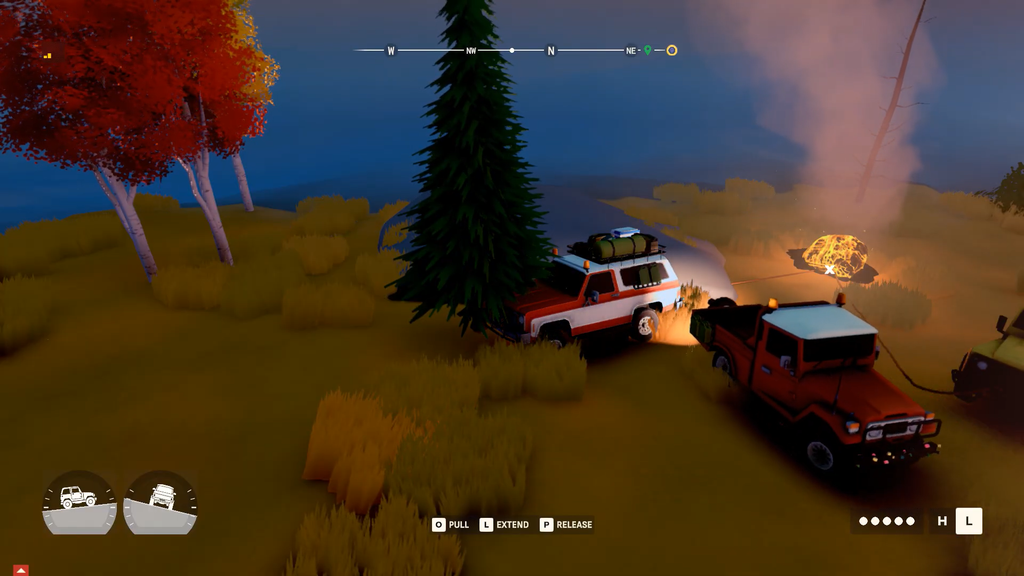
You know it worked when a METEORITE EXTRACTION COMPLETED banner appears on screen. The Pebbles are added to your total automatically. You don’t need to haul the rock to a drop-off point to get paid.
The other winch prompts are L to extend the cable and J to release it. Extending the line gives you more room to build speed before tension kicks in.
Meteorite sizes, Pebbles, and players required
Every meteorite has a fixed Pebbles value and a minimum number of players. The game shows the player requirement for each rock, so check it before you start pulling.
| Size | Pebbles | Players needed |
|---|---|---|
| Very small | 15 | 1 |
| Small | 20 | 1 |
| Medium | 30 | 1 |
| Large | 40 | 2 |
| Very large | 50 | 2 |
| Huge | 60 | 3 |
| Very huge | 80 | 4 |
The size of each new meteorite is rolled based on how many players are in the session. Solo players only ever see the three smallest sizes. A four-player lobby only spawns the three largest.
| Players in session | Size chances |
|---|---|
| 1 | Very small 41%, Small 35%, Medium 24% |
| 2 | Medium 41%, Large 35%, Very large 24% |
| 3 | Large 41%, Very large 35%, Huge 24% |
| 4 | Very large 41%, Huge 35%, Very huge 24% |
In co-op, split the meteorite’s value among the helpers, rounding up each share. A player qualifies as a helper if their winch is connected or they are no more than 10 m from the rock. For example, two players hauling a Large meteorite each receive 20 Pebbles.
Co-op meteorite rules: Direct lines and rope angles
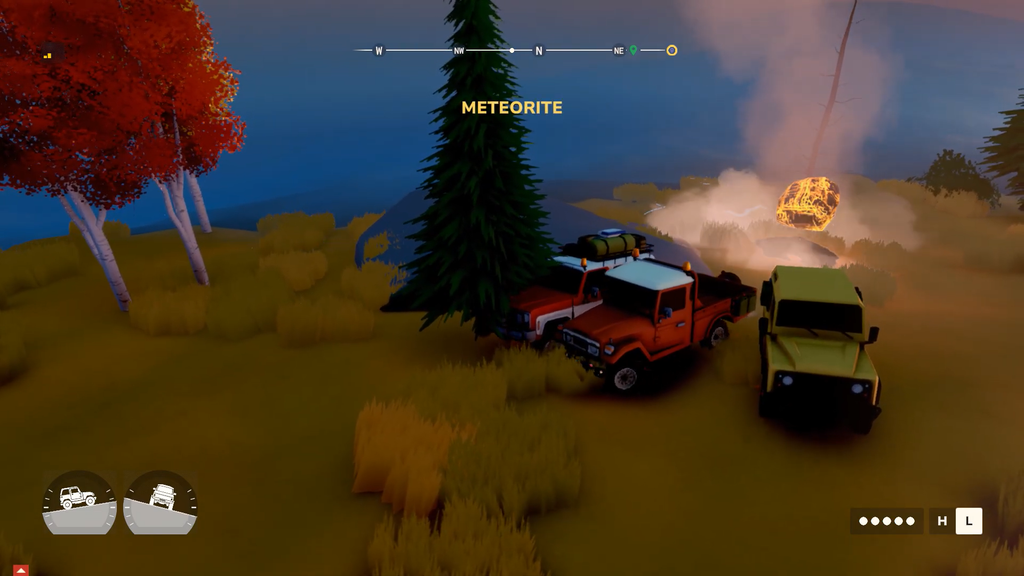
Multi-player rocks follow stricter rules, and most failed group pulls break one of these:
- Every helping vehicle runs its own winch cable straight to the meteorite.
- Chaining doesn’t count. A truck hooked to another truck’s bumper adds nothing to the pull.
- All ropes must be under tension at the same time, so everyone pulls together.
- No two ropes can pull more than 120° apart. Fan the vehicles out on roughly the same side of the rock.
A four-player Very huge rock therefore needs four separate cables, all attached to the meteorite, with every driver applying throttle at once.
Meteorite locations and the Meteorite Radar
Meteorites land on fixed spawn points: 208 across the five areas, with two to three on the ground in an area at a time. When one is extracted, a replacement picks a random free spot and falls one to five minutes later. Rocks that are already present when an area loads are on the ground from the start. Because rocks keep falling, meteorites are a repeatable source of Pebbles rather than a one-time clear.
| Area | Spawn points |
|---|---|
| Emerald Lake | 34 |
| Gimli Ridge | 31 |
| Asgard Mountain | 47 |
| Tassili n’Ajjer Desert | 48 |
| Aurès Mountains | 48 |
A spawn point is only a possible location, so a marked spot can be empty. At night, a fallen meteorite’s orange glow and column of smoke are visible from far away. To find one without guesswork, buy the Meteorite Radar from Crazy Gunther, the mechanic. It tracks the closest fallen meteorite on your compass.
The Meteorite Radar takes up an inventory slot. Make sure you still have room for recovery tools before you equip it.
Why a meteorite won’t come out
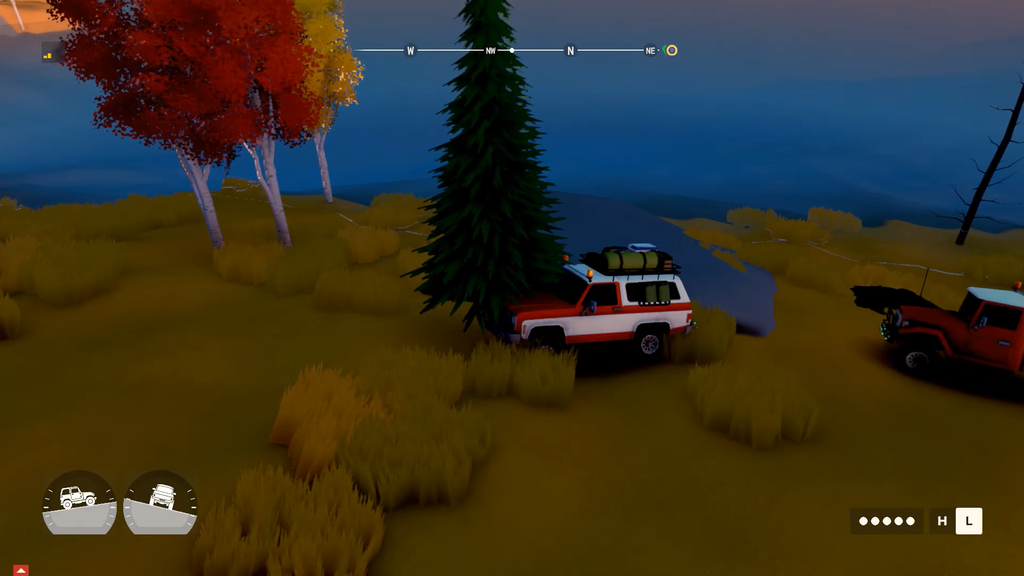
Go through these checks in order. Each one matches a known cause of a stalled pull.
| Check | Fix |
|---|---|
| Cable attachment | Rear of vehicle to the rock |
| Inputs | Throttle and winch held together |
| Co-op cables | Every vehicle wired directly to the rock |
| Rope angle | Keep lines within 120° of each other |
| Crew size | Meet the rock’s player requirement |
Terrain can also cause trouble. Pulls become unreliable on steep slopes, swampy ground, or surfaces with poor grip. If your vehicle slides toward the rock instead of drawing it in, reposition onto firmer ground. Players have succeeded with a longer line, a downhill angle, or the parking brake to keep the vehicle in place. Low Range provides extra traction when the wheels spin. If your vehicle begins digging in or gets close to an edge, stop and try another approach instead of forcing the pull.
Some rocks still won’t move after every check. In that case, file an in-game report that includes the exact map location and screenshots. A broken spawn can’t be diagnosed from a written description alone.