Egypt is the part of the original Tomb Raider most people remember, and it is the part Crystal Dynamics and Flying Wild Hog have rebuilt most carefully for Tomb Raider: Legacy of Atlantis. The reimagined Egyptian chapter keeps the landmarks from 1996 — the City of Khamoon, the buried tombs beneath it, the hunt for the final piece of the Scion — while rebuilding the geometry, lighting and puzzle logic from scratch in Unreal Engine 5.
Quick answer: Egypt is a rebuilt version of the 1996 game’s Khamoon levels, with Nanite-carved hieroglyphs and light-beam puzzles. The game launches February 12, 2027.
Tomb Raider: Legacy of Atlantis release date, platforms and pre-order bonuses
The game is co-developed by Crystal Dynamics and Flying Wild Hog and published by Amazon Games. It ships on PlayStation 5, Xbox Series X|S and PC through Steam, and it is rated TEEN by the ESRB.
| Edition | Survivor Outfit | 48-hour early access |
|---|---|---|
| Standard | Yes | No |
| Deluxe | Yes | Yes |
| Collector’s | Yes | Yes |
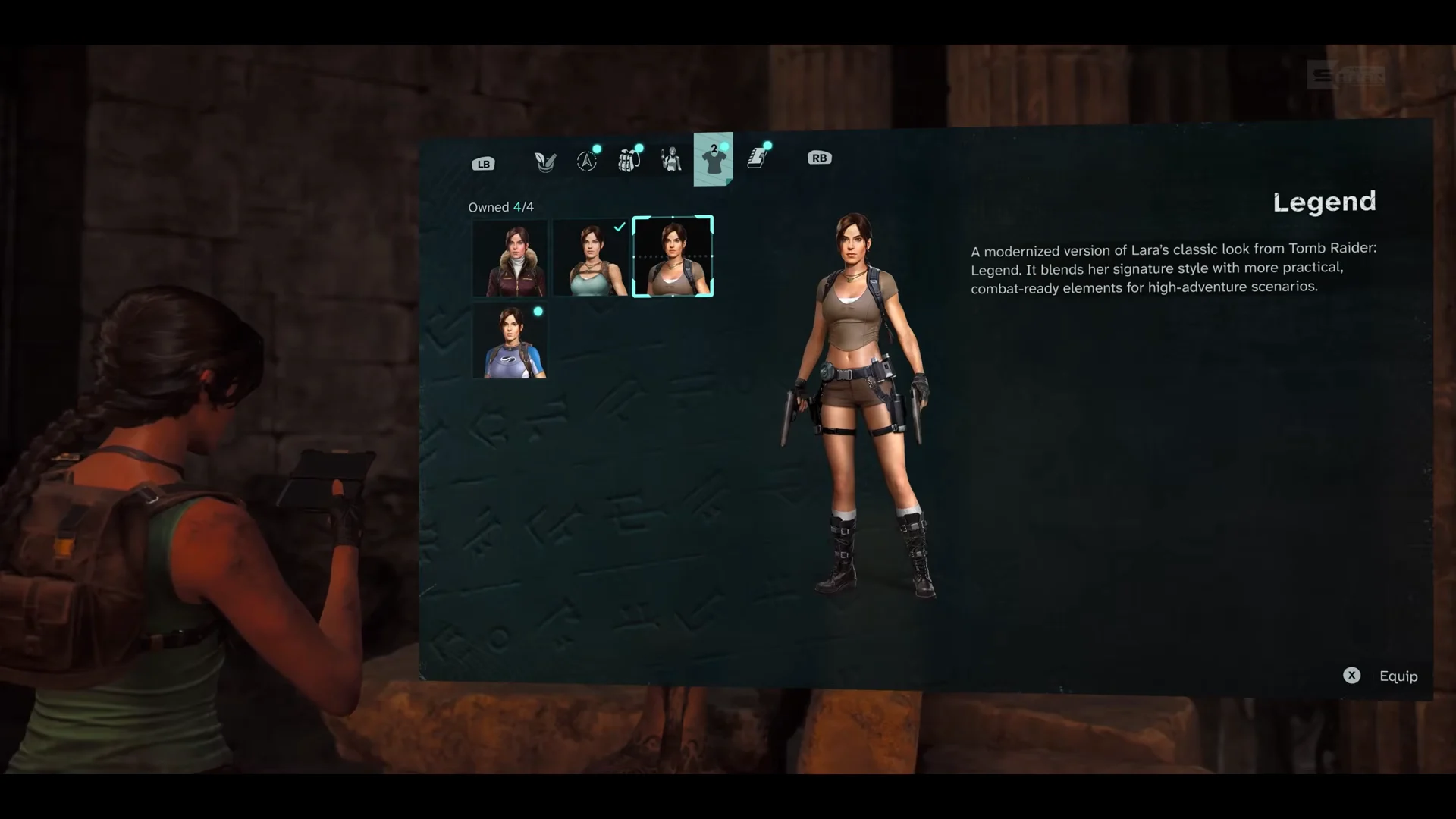
Pre-ordering any edition grants the Survivor Outfit. The 48-hour early access window is attached only to the Deluxe and Collector’s Editions. Outfits are swapped from Lara’s equipment and wardrobe menu, alongside options such as Adventurer Green and Legend.
Editions and bonuses are listed on the official Tomb Raider site.
What the Egypt levels actually are: Khamoon and the last Scion piece
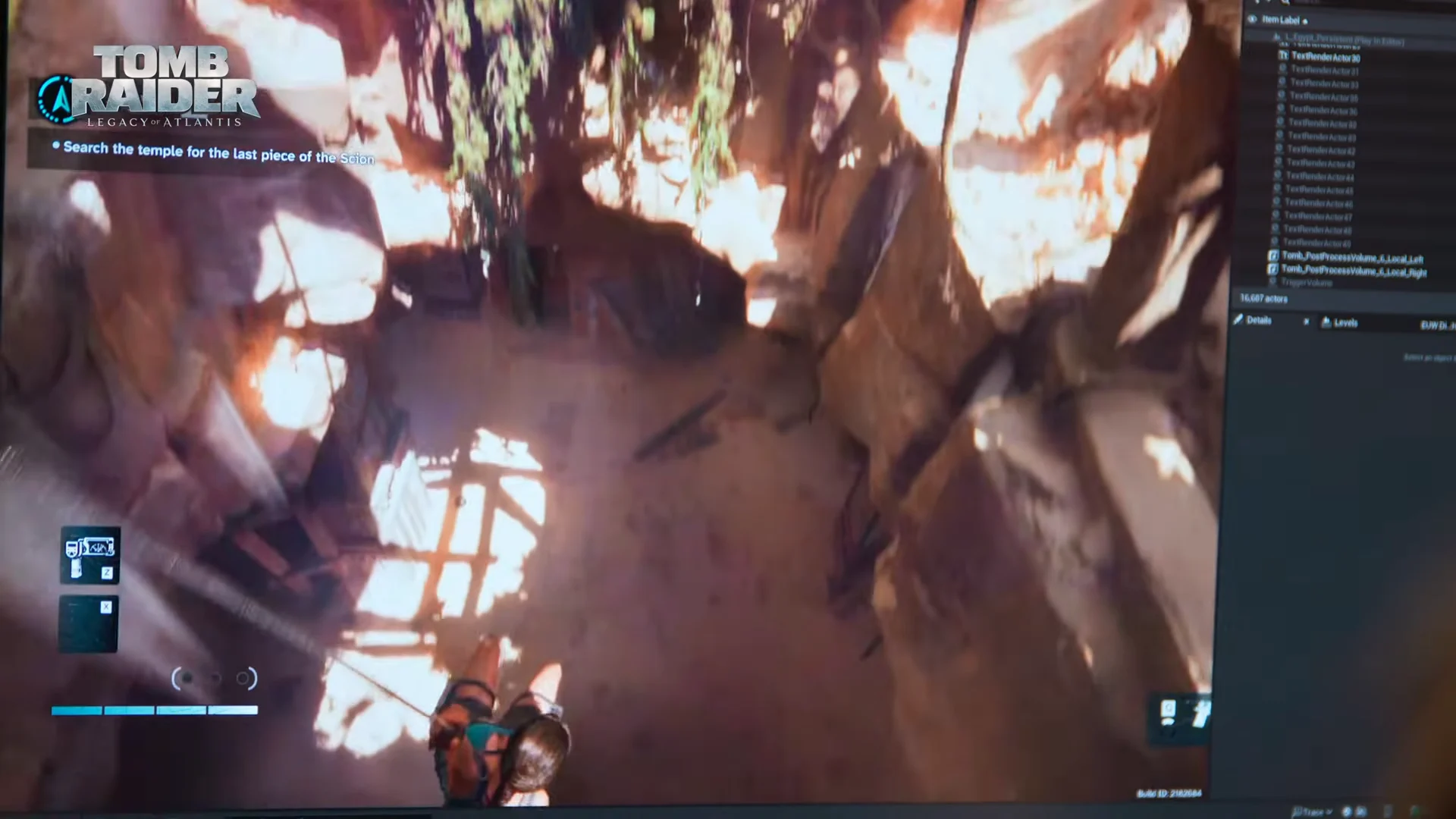
In Egypt, the HUD tells you to search the temple for the Scion’s final piece. The route follows the original’s archaeological descent: begin in the outer City of Khamoon, then make your way into the tombs below, where the remains of earlier tomb robbers still lie.
Experience Director Jeff Adams has framed the approach as keeping locations recognisable to players of the 1996 game while making changes that respect the culture being depicted and push the story forward. Art Director Arek Tomaszewski describes the goal as déjà vu — the sandy palette, the green water, the silhouettes of Anubis statues — rendered at a fidelity that works for someone who has never touched the original.
One detail shaped the writing more than any other. Lead Narrative Maria Borys-Piątkowska’s research turned up that Khamoon was never a real historical figure at all, but a character invented for the 1996 game, which meant the team had to dig through the original development material rather than Egyptology texts.
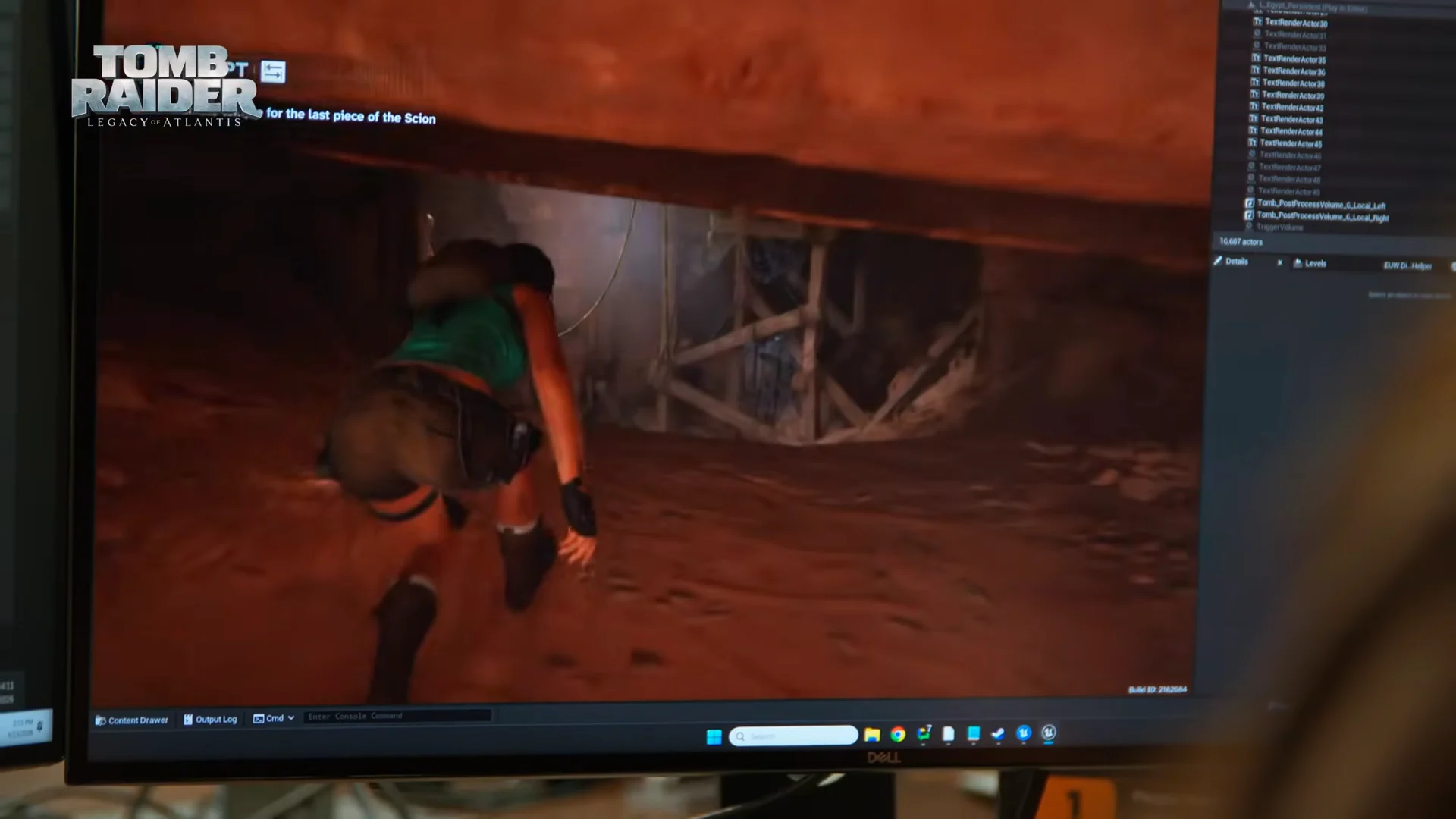
Nanite hieroglyphs and the mirror light puzzles
The most concrete technical change in Egypt is how the walls are built. Rather than painting hieroglyphs onto flat surfaces as textures, Art Manager Louis Lu says the team studied real hieroglyphs and their meanings, then carved them directly into the 3D geometry using Unreal Engine 5’s Nanite.
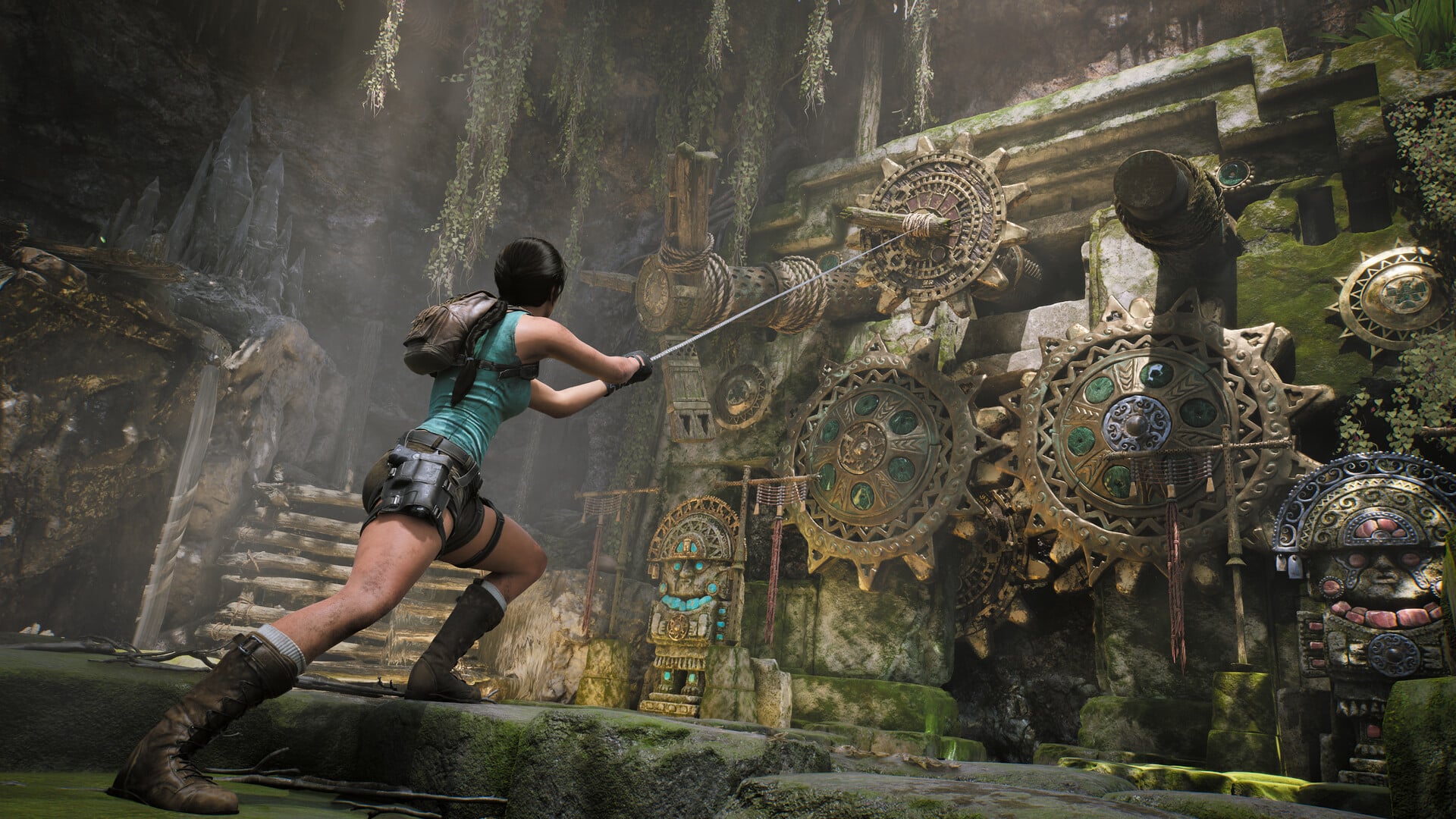
The practical result is lighting. Because the carvings are real depth rather than a surface trick, light lands in the grooves and bounces off the stone the way it would in a physical tomb. That matters for gameplay too, since Egypt leans on mirror puzzles where Lara aligns a shield to redirect a beam of light across hieroglyph-covered walls and colossal statues.
Design Director Jason Epps points to the same research driving the art direction more broadly — the colours, the specific stone types, and the writing systems that cover every pillar.
Scale, isolation and the Osiris Trial puzzle
Creative Director Michał Kuk and Level Designer Jarosław Skwarek both tie the Egypt design back to one idea — monumental architecture. Ancient Egyptian temples were built for display, so the puzzle chambers are built for display too. Rooms are oversized, the mechanisms are theatrical, and the emptiness is deliberate. Senior Level Designer Mateusz Dzięcioł describes wanting the player to feel like the only person left in the desert, which is the same feeling the original got out of its sparse caves and mummy noises.
Mythology feeds directly into the level layouts. Skwarek researched Egyptian gods specifically to find structures worth building a room around, and the clearest example is the Osiris Trial, a chamber where a statue is broken apart into segments. It takes the myth of Osiris being cut into pieces and turns it into a single connected trap-and-puzzle mechanism rather than a background reference.
Dzięcioł explicitly recommends climbing and backtracking through areas you have already cleared. Secrets in Egypt are hidden along vertical routes that only open up after you have changed something elsewhere in the level.
How Egypt fits with the game’s other regions
Egypt is one of three returning locations from the 1996 game, sitting alongside Peru and Greece. Tomaszewski treats the colour palettes of the three as a set, each distinct enough to be identifiable on sight but consistent in how they are lit and composed.
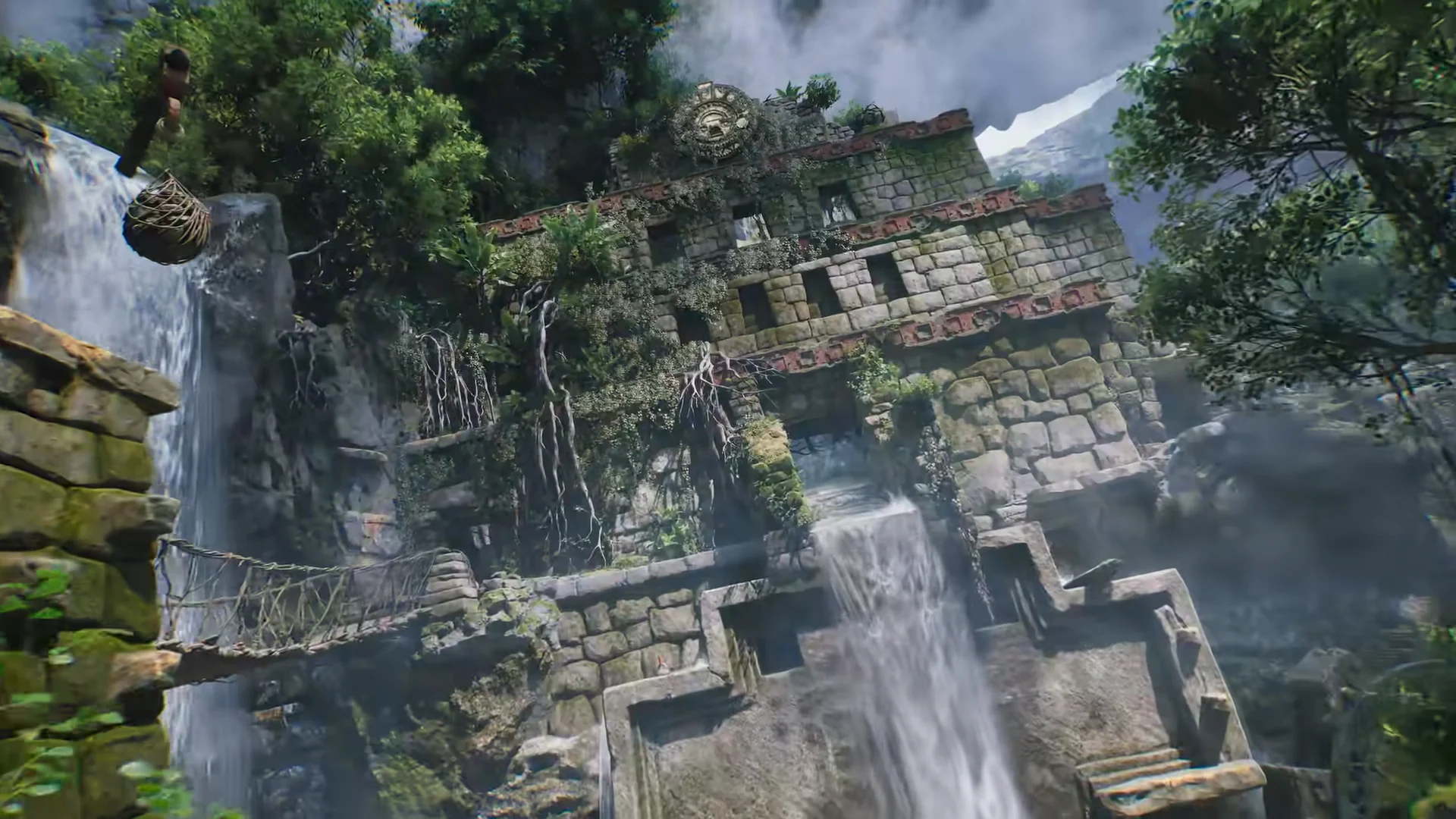
Peru covers the jungle and waterfall sections, including the sunken city, and is where the dinosaur encounters live — raptors and a feathered Tyrannosaurus rex that pursues Lara across a collapsing path. Greece contains the Damocles trial and its hanging swords, reached through an ornate sealed gate.
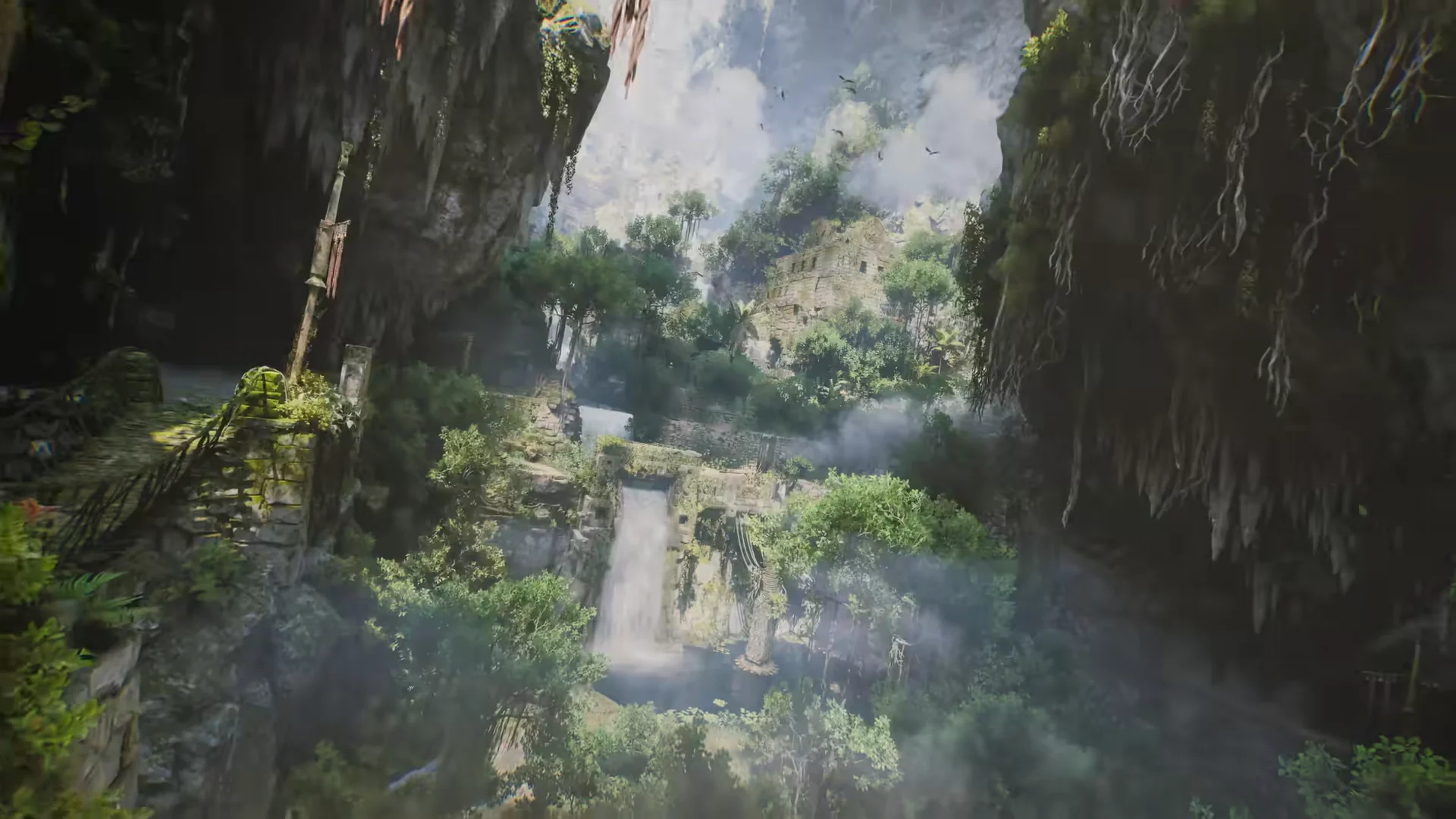
Mechanically, the regions share the same toolkit. Lara scans murals and devices with a handheld scanner to unlock field notes, pulls ropes and turnstiles to move counterweights, tethers wheels with a rope line, and rotates large stone gear mechanisms to divert water. The Egypt mirror puzzles are a variation on that same logic rather than a separate system.
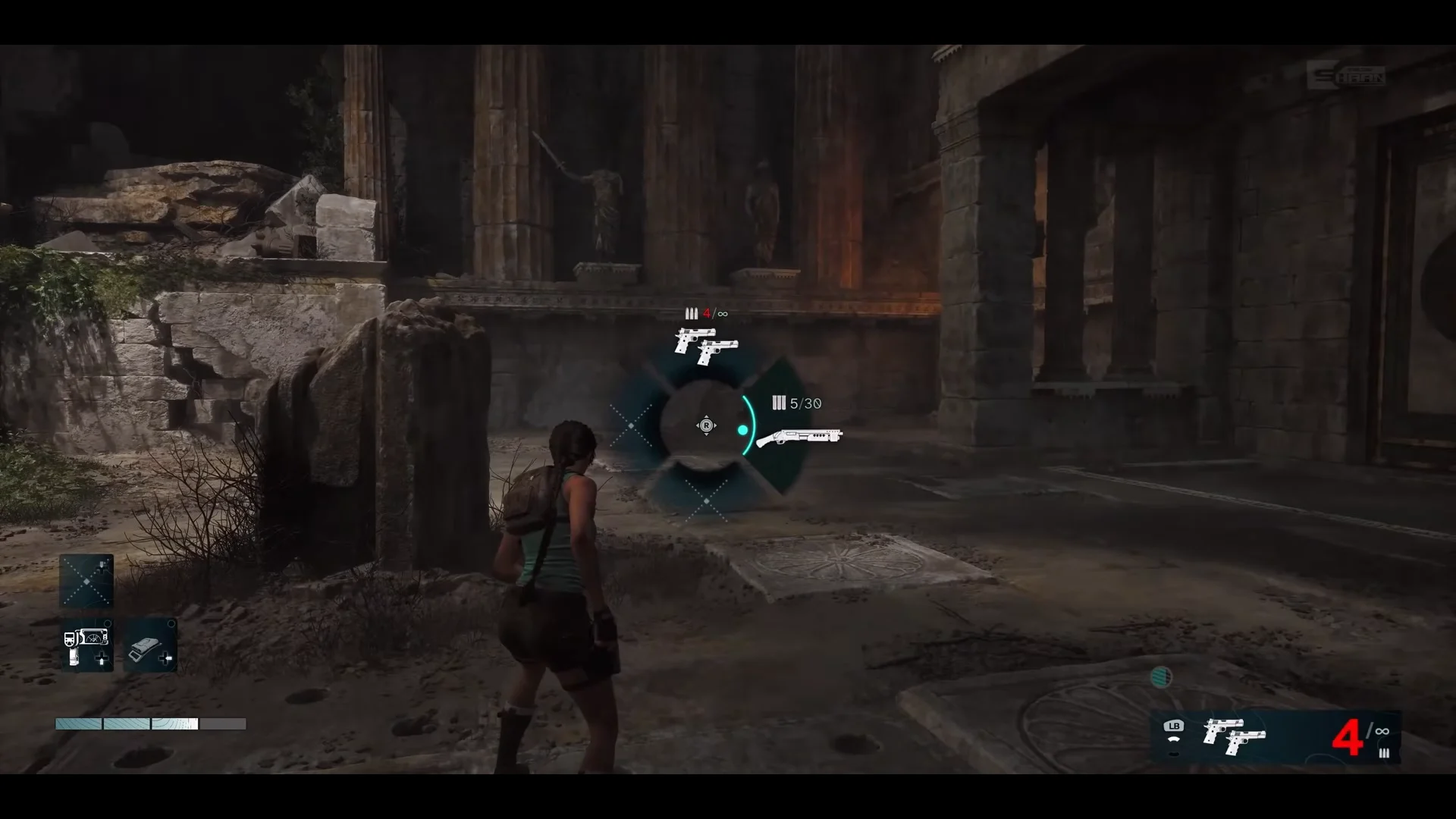
Combat runs on dual pistols by default, with a radial weapon wheel for swapping to heavier options such as the shotgun, plus a slow-motion focus mode and evasive cartwheels for animal encounters.
Taken together, Egypt reads less like a remaster of the 1996 levels and more like a rebuild that keeps the original’s landmarks and pacing while replacing everything underneath them. The Scion objective, Khamoon and the sense of being alone in a very large tomb all survive — the geometry, the lighting and the puzzle mechanisms do not.