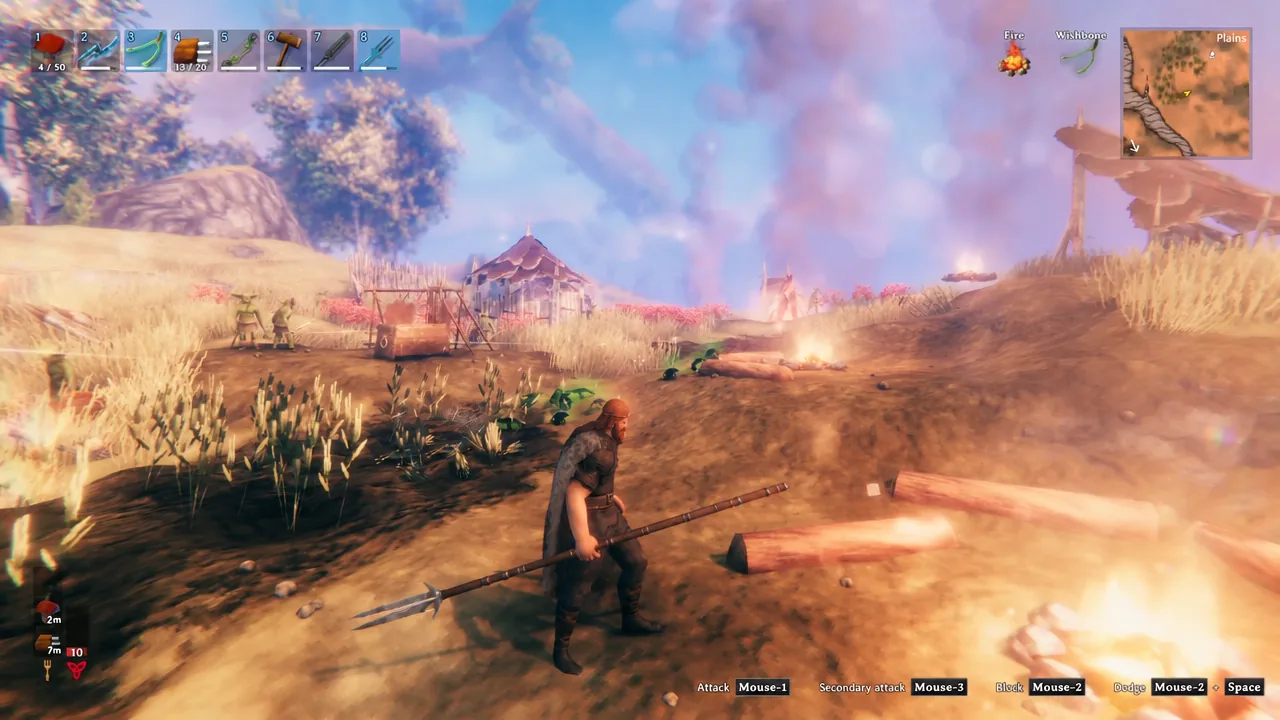
Flax and Barley are the two crops standing between you and Padded armor, bread, and fire resistance wine. Neither grows wild in the grass, and neither can be bought. Both sit inside Fuling villages in the Plains, guarded by the angriest enemies in the game, which is exactly why so many players stall out at this point in a run.
Quick answer: Head to a Fuling village in the Plains, clear or sneak past the Fulings, and harvest the small cultivated patches next to the huts. Every plant drops two crops.
Where Flax and Barley spawn in the Plains biome
Both crops are tied to Fuling settlements. Once you are inside a village, walk the ground around the huts and look for small squares of dark, tilled soil sitting apart from the wild grass. Flax shows yellow flowers on top of tall stalks. Barley looks like pale grain.
| Crop | Where it appears | Typical patch size | Yield per plant |
|---|---|---|---|
| Flax | Cultivated patches in Fuling villages | 15–20 plants | 2 Flax |
| Barley | Cultivated patches plus Plains chests in villages, outposts and ruins | About 12 plants | 2 Barley |
Barley is the more common of the two. Flax fields do not appear in every settlement, so expect to sail along a few Plains coastlines and raid several villages before you land a proper Flax patch. Cracking open the chests scattered around Fuling structures is also worth the detour, since Barley turns up inside them.
How to harvest Flax and Barley in a Fuling village
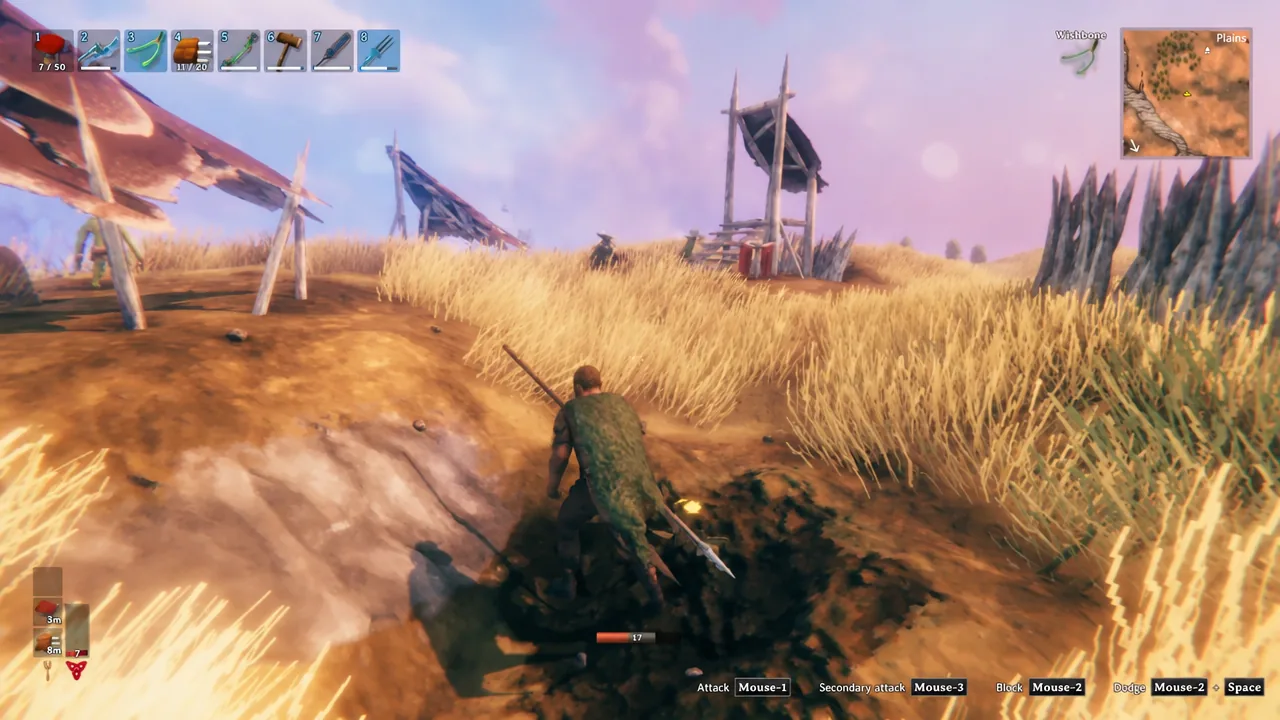
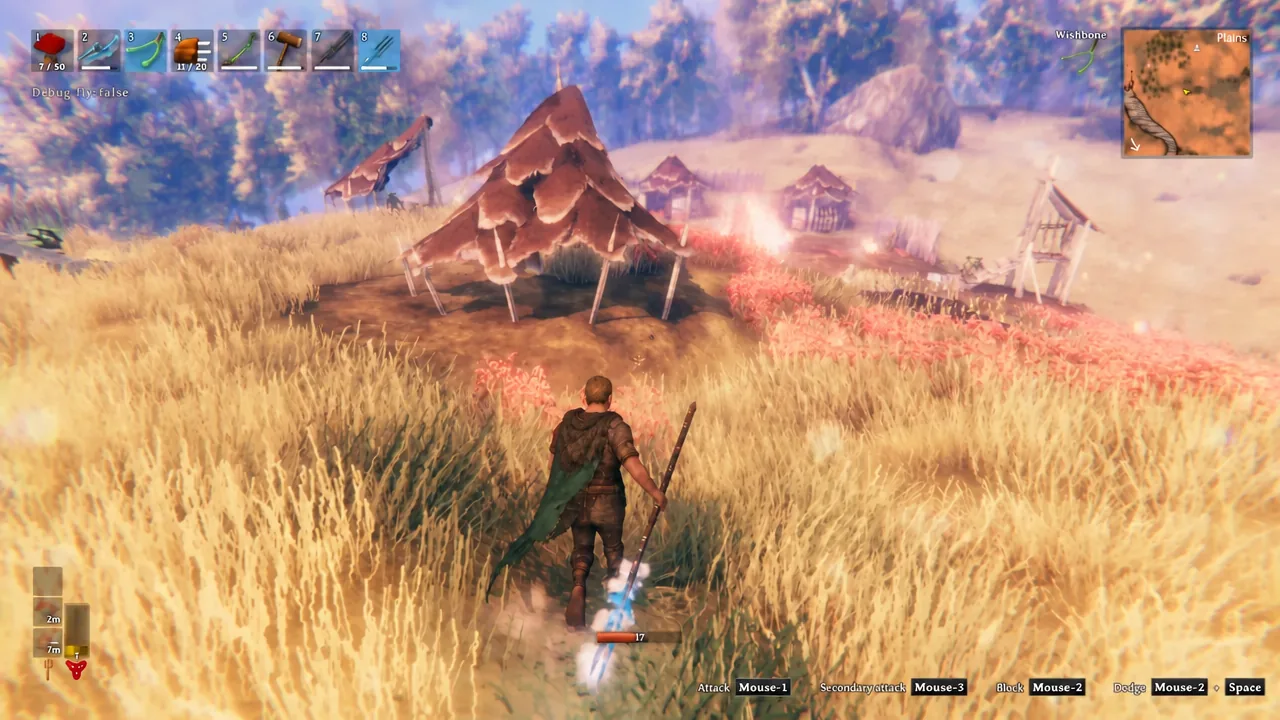
Weapon harvesting gives no Farming skill experience and never rolls the bonus-yield chance. Picking by hand or using a Scythe can leave you with more crops overall, so save the sledge for when Fulings are closing in.
Watch your inventory before you start swinging. A “No room in inventory” message means the drops are hitting the ground instead of your bag, and a Fuling raid is a bad time to be sorting stacks.
How to farm Flax and Barley at your own base
Raiding villages is a stopgap. The real supply comes from replanting, and both crops double when grown, so a single stolen Flax becomes two. Replant a portion of your first haul immediately rather than burning it all on gear.
There is one hard restriction. Flax and Barley can be planted on any cultivated ground, but they only actually grow inside the Plains biome. A Meadows plot will accept the seed and then sit there forever, so your farm has to be a fortified Plains outpost, or a base built on a Plains corner that borders your main territory. Keep them well away from snow biomes.
- Craft the Cultivator first. It needs bronze, so the Black Forest has to be behind you.
- Level the ground with a Hoe, then till it with the Cultivator.
- Leave roughly 1 metre between plants. A red outline means the spot is too crowded and nothing will grow.
- Fence or wall the plot. Wildlife and raids will trample an unprotected field.
- Always replant more than you pull out so the supply compounds.
Growth takes between 4,000 and 5,000 seconds, which works out to roughly 67 to 83 real minutes, or about two and a half in-game days. You will know a crop is ready when the plant is fully grown and hands over two units on harvest instead of one. On a dedicated server, crops keep maturing while the world stays loaded, even if nobody is standing in the field.
What Flax and Barley are used for
Neither crop is useful raw. Each one needs its own processing station, and both stations are worth building directly on the Plains farm so you are not hauling stacks through portals.
| Station | Build cost | Turns |
|---|---|---|
| Spinning Wheel | 20 Finewood, 10 Iron Nails, 5 Leather Scraps | Flax into Linen Thread |
| Windmill | 20 Stone, 30 Iron Nails, 30 Wood | Barley into Barley Flour |
The Spinning Wheel works like a Charcoal Kiln. Load the Flax, wait, then collect the Linen Thread that drops beside it. That thread feeds the Padded set, with 20 thread and 10 iron each for the Greaves and Cuirass, and 15 thread and 10 iron for the Helmet.
The Windmill needs to sit near an Artisan Table, and it needs clearance on both sides, since Barley goes in the back and flour comes out the front. Wind speed matters here, so an exposed spot produces more. Barley Flour goes into bread, which needs 10 flour, and blood pudding, which takes 2 thistle, 2 bloodbags and 4 flour. Raw Barley also feeds Lox and Hens, and goes into the fire resistance barley wine base. Flax, meanwhile, works as Lox feed and as a building material for straw.
Once the Plains plot is fenced, planted and producing on its own cycle, the Fuling villages stop being a supply run and become optional. That is the point where Padded armor and a full bread stack stop feeling like a project and start being routine.