EverQuest Legends drops you into classic Norrath with a modern twist, and the first few hours can feel dense. The systems that trip up new players are rarely the flashy ones. They’re small, easy-to-miss tools that quietly decide whether your early grind is smooth or frustrating.
Quick answer: Bind the Find command (F key) for navigation, spend AA points carefully because they can’t be refunded, use private instances to farm named drops without competition, watch for social enemies that pull in packs, and claim your third class at level 10 from a Loadout terminal in any Newbie Yard or major city.
Use the Find command to navigate cities and open zones
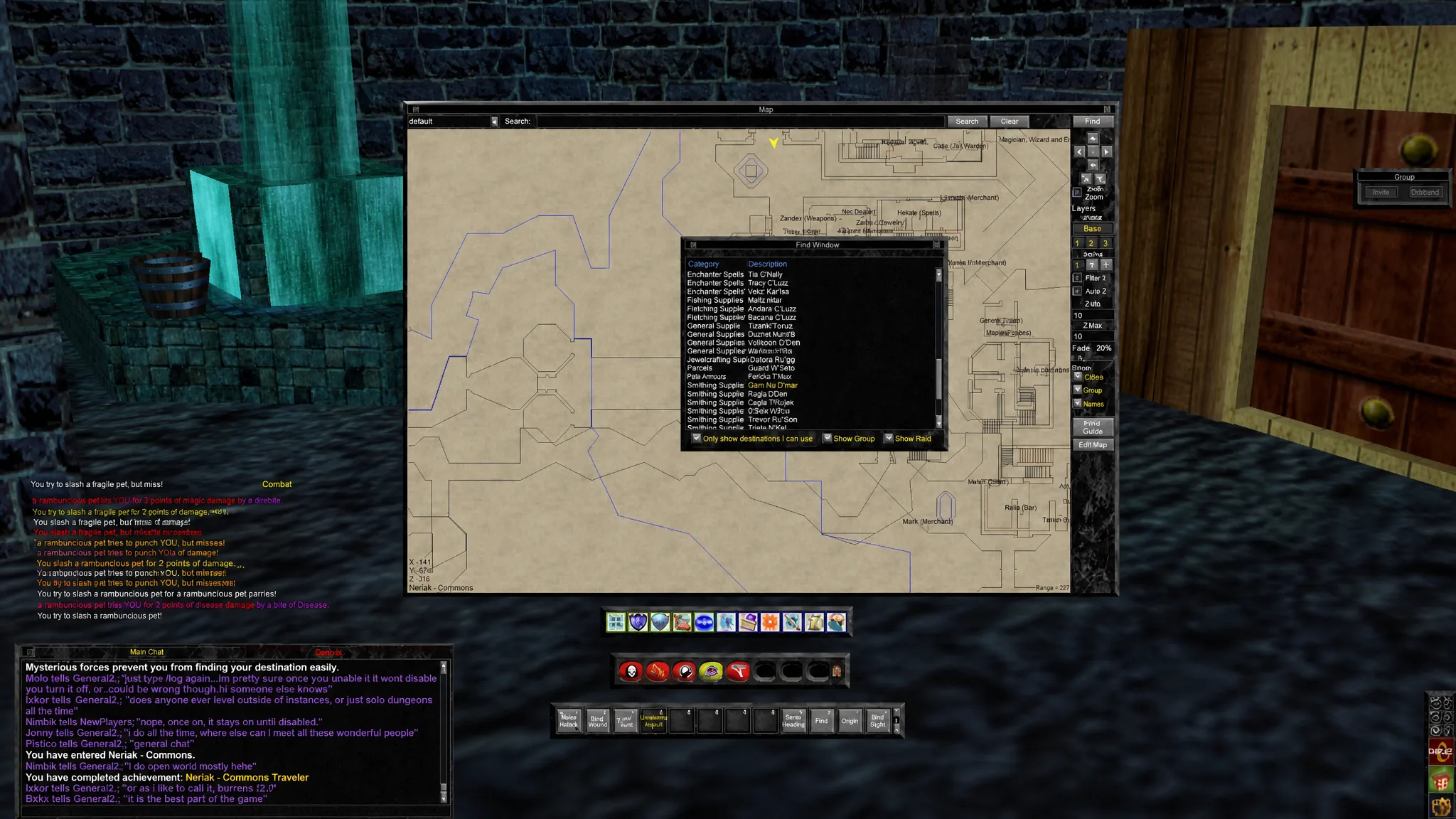
The in-game map is thin, and starting cities are mazelike. The Find feature solves most of that. It may already sit on your hotbar, and it’s also bound to the F key by default.
Open Find and it lists the NPCs and locations you can reach in your current area. You can filter it down to only the destinations you actually have access to. Pick one, and the game draws a line on your map plus an ethereal trail on the ground that walks you straight there. A few spots, like the Dark Elf starting area, will tell you it can’t help, but almost everywhere else it works.
Spend AA points carefully — they can’t be refunded
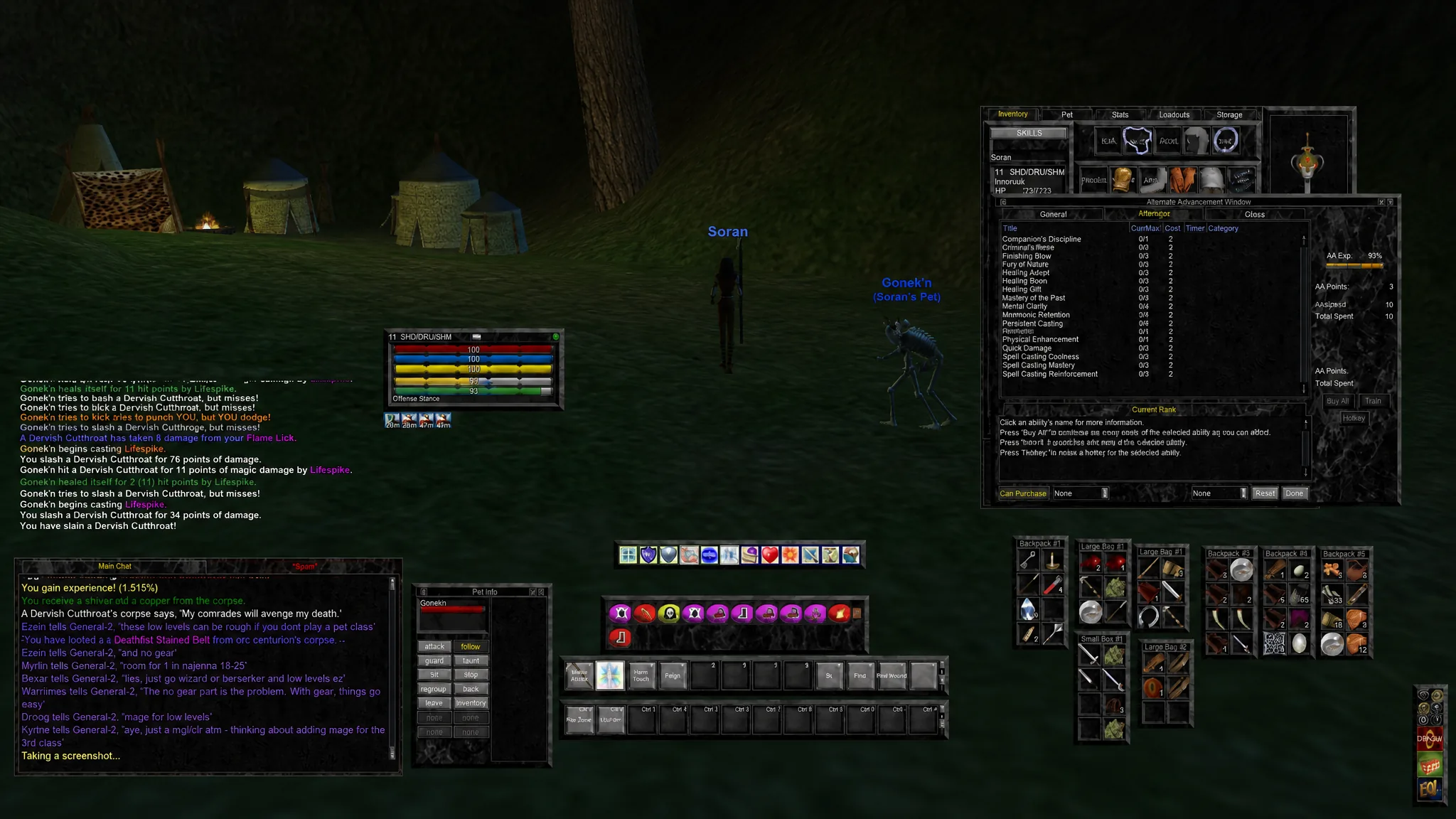
Alternate Advancements give your character extra combat power, and you start earning them at level 1. Progress fills a bar sitting just under your normal experience bar, so you can always see where you stand. There’s no cap, which means you can keep grinding them indefinitely.
The catch is permanence. Once you buy an AA, that choice is locked and cannot be undone. A handful are worth grabbing early no matter what you play, including Mnemonic Retention and Quick Buff, which reapplies buffs from your spell bar efficiently for five points. Others matter a lot but aren’t mandatory, so think before you spend rather than dumping points reflexively.
Farm named drops with private instances
Fighting other players for a named boss or a specific drop is one of the oldest EverQuest headaches. Legends fixes it at launch with personal, private instances. If you’re chasing a particular weapon or item, this is the tool to reach for first.
Whether you want duplicates to merge into a stronger version, or you just need one powerful piece to equip, a private instance removes the competition for named enemies and bosses entirely. Heading to Befallen for weapons is a good example. Spin up a private instance and the camp is yours. The feature runs on charges, so you can’t use it endlessly, but for targeted farming it’s hard to beat.
Personal instancing also lets you set difficulty from 0 to 4. Higher tiers grant more experience and better drops, which suits solo players who want a challenge without assembling a full group.
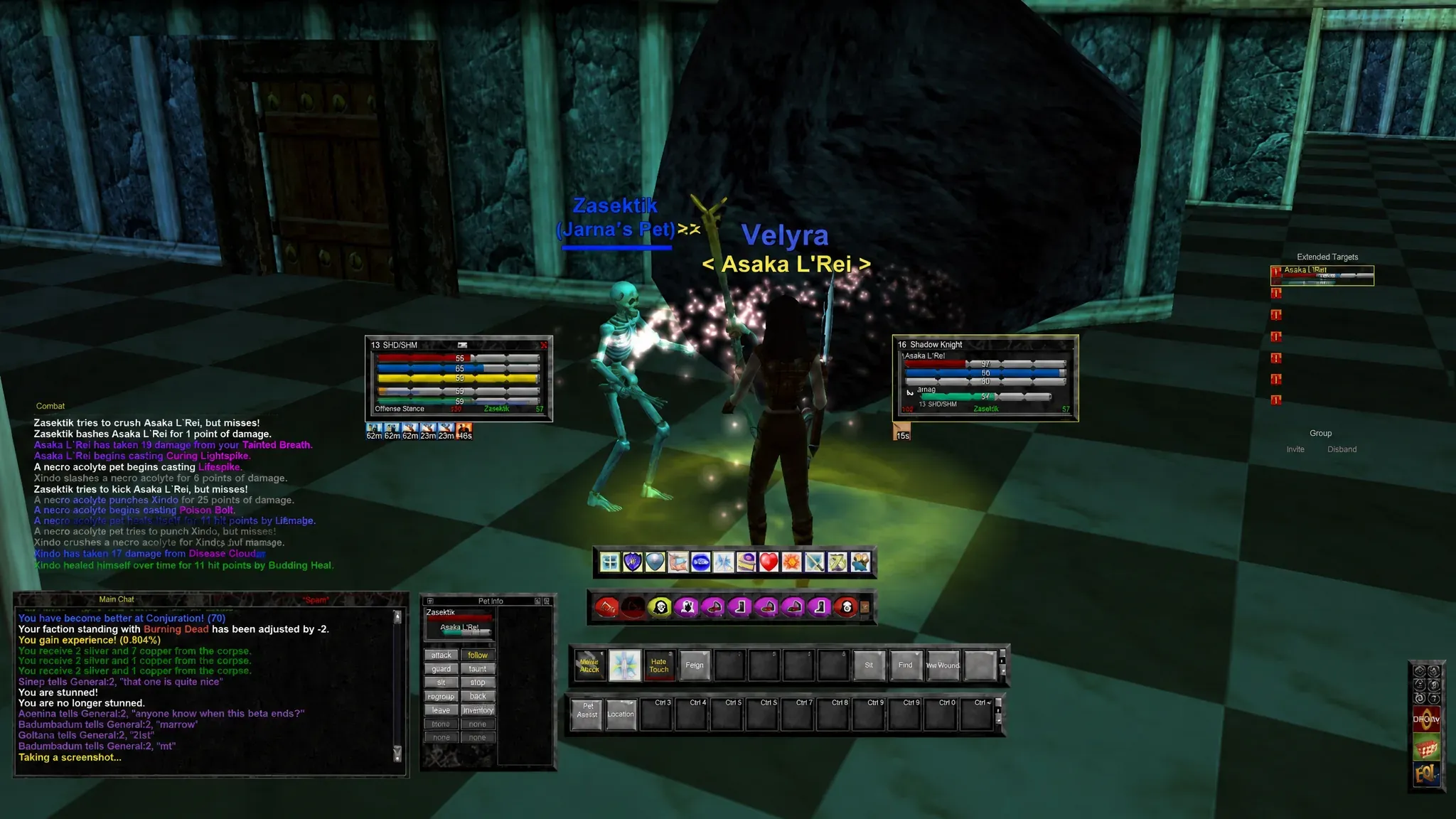
Watch for social enemies, especially at night
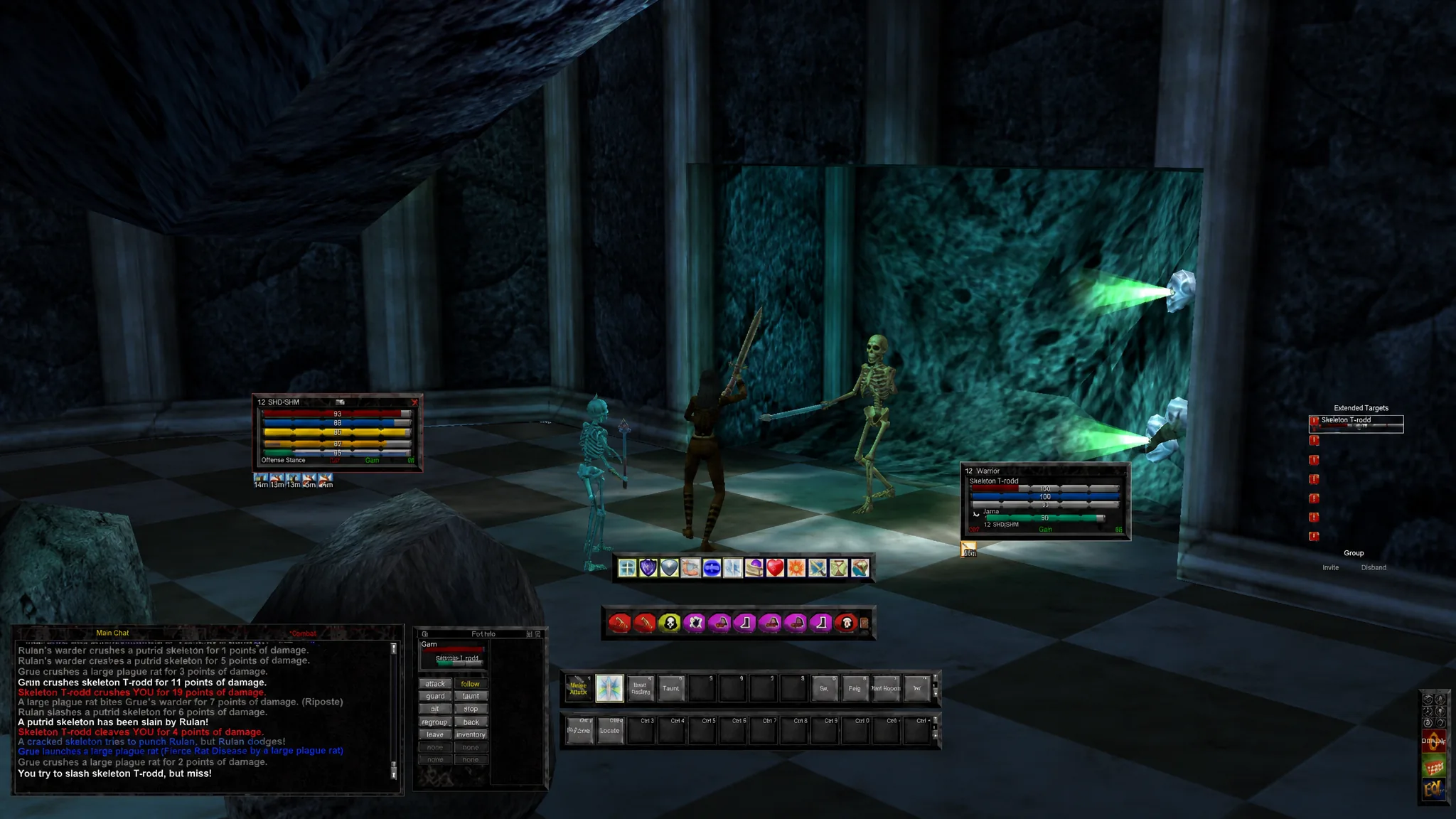
“Training” is the classic EverQuest term for a swarm of aggressive enemies chasing you at once, and it’s very much alive in Legends. Many creatures call for help when you attack them, so a single fight turns into six. Bears are a notorious example, and so are clustered humanoids like camp dwellers.
You might be handling one level 10 bear in the Commonlands, then find several more of varying levels piling on before you notice. Aggro ranges vary, and they matter most inside dungeons and out in the world after dark. If you have a way to lower aggro, such as a spell, use it before you commit. Stay aware of what’s around you.
The Consider system helps you judge risk before engaging. Target a creature and press C, then read the nameplate color and the chat message. Red and yellow are above your level, white is even, and dark blue is a safe kill. A mob that “scowls at you, ready to attack” will jump you on sight.
| Con color | Threat level |
|---|---|
| Red | Several levels above you — likely lethal |
| Yellow | Above your level — high risk, high XP |
| White | Your level — a fair fight |
| Dark blue | Below your level — safe, steady XP |
| Green / gray | Trivial — little or no XP |
Claim your third class at level 10 — and swap with care
Every hero runs up to three classes at once. Your primary is set by your race’s classic restrictions and stays locked for a long time, but the second and third slots are flexible. The third slot opens at level 10, and it’s easy to overlook.
That reset isn’t a disaster, just a surprise if you’re not expecting it. Planning your full trio before level 10 keeps it from catching you off guard. The Origin AA, paired with a few travel spells, also makes these trips painless. You can return to a city, swap classes, and get back to your camp without a long walk.
None of these habits require deep system mastery, but each one removes a specific point of friction in the opening hours. Get comfortable with Find, respect the permanence of AAs, lean on private instances for the loot you actually want, and treat every level 10 milestone as a trip back to town. Norrath rewards players who slow down just enough to learn its rules before the grind picks up.