Career Mode in EA FC 27 keeps the same shell as last year but rewires almost everything underneath it. The transfer market now behaves more like the real one, player ratings rise and fall with form, and you can build and share your own scenarios with other managers. Here is what changes and how each piece works.
Quick answer: The four headline additions are a TransferRoom-powered transfer overhaul, a Dynamic OVR system that ties ratings to form and morale, a web-based Creator Challenge dashboard, and expanded world simulation with new rivalries and unexpected events.
The transfer system gets a full rebuild
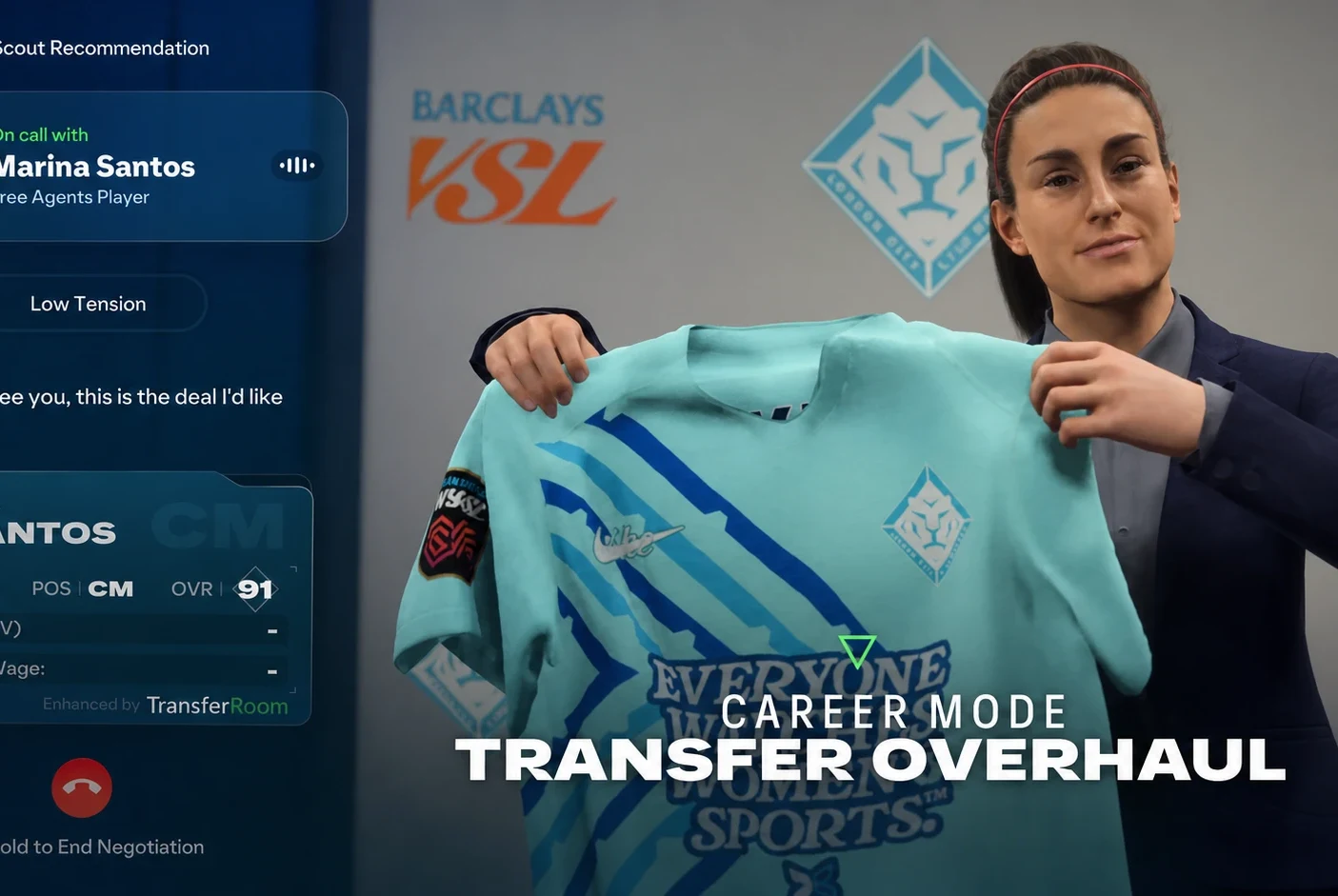
The biggest structural change sits in the transfer market, which now runs on a partnership with TransferRoom, a real-world platform clubs use to find targets. Its Expected Transfer Value (xTV) system feeds into scouting, so prices reflect factors like age, potential, and contract length instead of arbitrary numbers. You will not always get an exact figure when you scout a player, but xTV gives a reliable indicator of what a deal should cost.
Scouting itself returns comprehensive data upfront rather than making you wait weeks for basic stats. Reports cover Future Ability, Tactical Squad Fit, Current Status, and a Detailed Financial Assessment, so you can judge a signing before opening talks.
Negotiations drop the old cutscenes for a streamlined 2D interactive flow, and they happen in parallel with the selling club and the player. You speak directly with the other club’s manager to finalize a fee, and you have granular control over the shape of the deal, including loan-back agreements, buy-back clauses, and sell-on clauses. You no longer have to pay everything upfront either, since you can reduce the initial fee, pay in instalments, and attach bonus conditions that trigger later.
Player demands run deeper too. You have to agree a specific squad role, and breaking that promise carries consequences for morale. Deals also take time to complete, which opens a window for a rival club to arrive with a better offer. In that case you have to convince the player to pick you instead. A streamlined shortlist lets you watch every target at once rather than checking each one individually.
Dynamic OVR makes ratings move with form
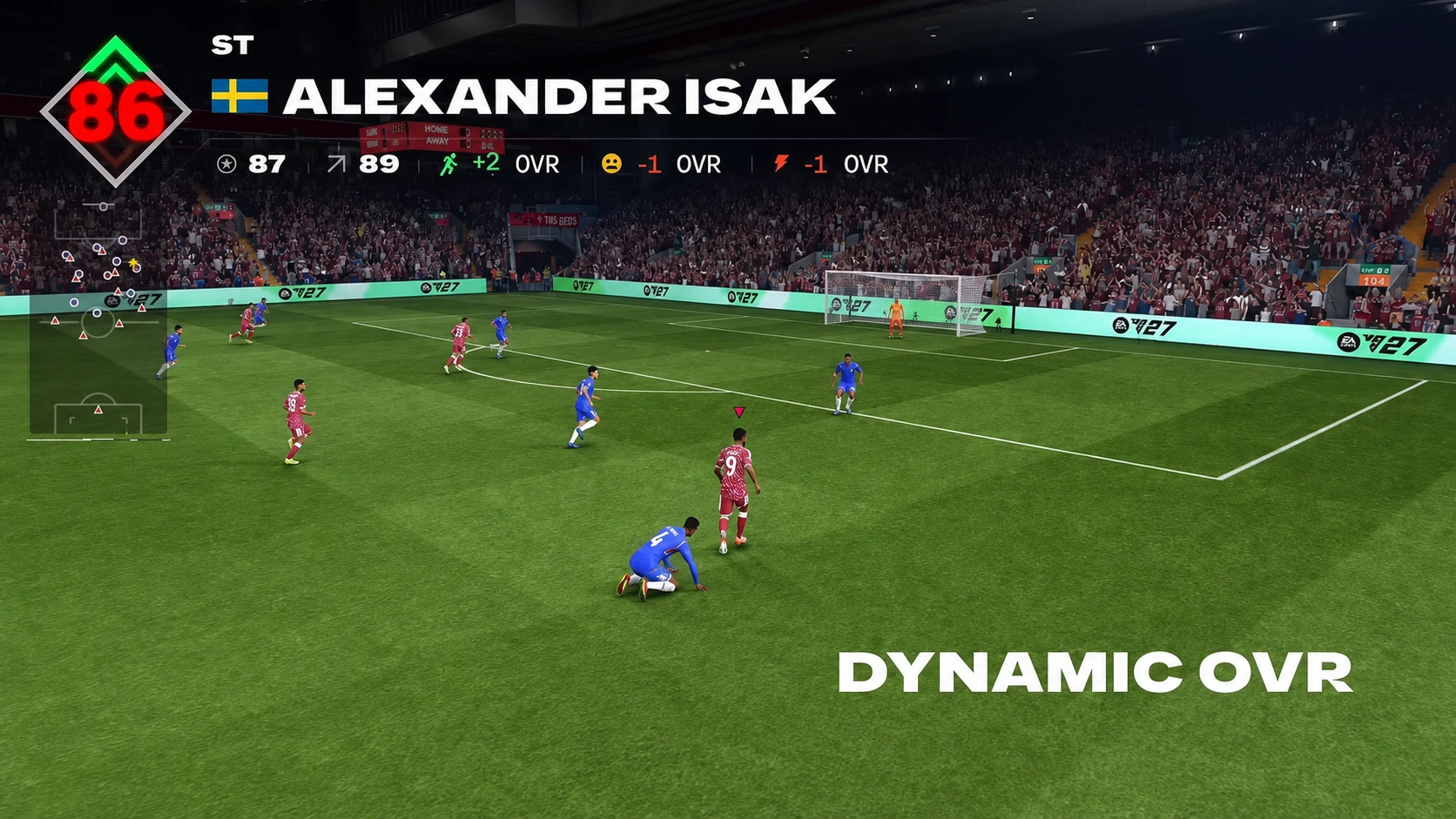
Player Overall Ratings are no longer fixed. A rating now behaves like a living value that shifts with a player’s real-time situation. A strong run lifts it, while a slump or a long-term injury drags it down. Give Pedri a ten-game hot streak and his number climbs, but a bad stretch can pull him toward the low 80s.
The boosts and drops are targeted rather than global. An in-form midfielder becomes a better passer, not a better finisher, so form maps onto the attributes that actually matter for that player. Morale and Match Fitness feed into the same system, with high morale lifting a rating and low morale actively lowering it.
Match Fitness replaces the old training plans and decides how physically ready a player is on matchday. The injury model is more granular as well. Minor knocks now linger and eat into Match Fitness, forcing a real choice between risking a star or resting him to avoid something worse.
Positions also work differently. Every player carries a total of seven positions, with one they know intimately and the rest scaling by their stats and attributes. A versatile player like Jude Bellingham takes a smaller penalty when used out of position, while a specialist suffers a steeper drop. A baseline overall system sets each player’s starting numbers by position before form starts moving them.
| Factor | Effect on rating |
|---|---|
| Form | Good runs raise OVR; slumps and injuries lower it |
| Morale | High morale boosts OVR, low morale reduces it |
| Match Fitness | Replaces training plans and sets physical readiness |
| Position familiarity | Seven positions per player with role-based penalties |
Creator Challenges bring community scenarios in
Career Mode has mostly been an offline experience, and Creator Challenges change that with a web-based dashboard for building custom scenarios. You craft a narrative, set the rules, and define win conditions, then publish it. Once live, the scenario gets a share code that other players can enter in-game across every platform.
The scope is wide. You could recreate a club hit with a 15-point deduction from a financial scandal and see whether you or your friends can survive it. Creators can share challenges with their audiences, you can do the same with your own circle, and the companion app lets you build and pass them along quickly. Players upvote the strongest ones, which pushes them into a curated Spotlight section.
World simulation, regens, and rivalries
The surrounding football world is broader this year. You can select up to 10 leagues for deep simulation, which means more realistic data and sharper AI management around the globe. Opposing clubs are meant to build squads and pursue transfers more logically, reflecting each club’s identity and playing style rather than making unrealistic moves.
The regen system has been reworked so retired players no longer produce predictable clones. New regens get randomized data and feel like distinct individuals. When Lionel Messi retires, his regen could show up as a tall center-back, a goalkeeper, or a central midfielder from any country, carrying his high potential but none of his profile.

Player Career adds a Rivalries system that pits you against an AI opponent across a set task, such as out-assisting a rival over five games. Winning earns Personality Points and drives the story through social media reactions. Unexpected Events return as well, ranging from simple injuries to ego clashes inside your squad, and how you handle them shapes morale and performance. In one training example, staff push you to promote a standout performer like Reijnders into the starting lineup, leaving the call to you.
Authentic gameplay and defending changes
Career Mode runs on Authentic gameplay, which is tuned separately from the Competitive settings used in Ultimate Team. Across the game, EA is pushing more manual control and less automation. In Competitive play, AI defenders no longer auto-tackle as soon as an attacker gets close, manual jockey speed and stand-tackle range go up, and interception reach for AI defenders is reduced. The full breakdown of how these defending shifts apply to Authentic gameplay is the piece Career Mode players will want to watch for.
You will know the new systems are working once ratings start shifting week to week, xTV figures appear on scouted targets, and transfer talks open in the 2D negotiation screen instead of a cutscene. If a signing stalls, the usual cause is an unmet squad-role promise or a rival club hijacking the deal before it closes.
When you can play it
EA FC 27 launches on September 25 for PlayStation 5, PlayStation 4, Xbox Series X|S, Xbox One, PC, Nintendo Switch, and Nintendo Switch 2. Ultimate Edition and Ultimate Plus Edition copies include early access starting September 18. Career-focused pre-order extras include Pre-Order Challenges, a Dynamic OVR pre-season boost, three ICONs or Heroes, a five-star coach, and five-star youth and senior scouts.
Taken together, these changes point Career Mode toward the kind of dynamic, data-driven management the mode has lacked for years. Ratings that move, transfers with real leverage, and shareable challenges give you far more to react to across a long save, and the real test will be how they hold up once you spend a full season inside them.