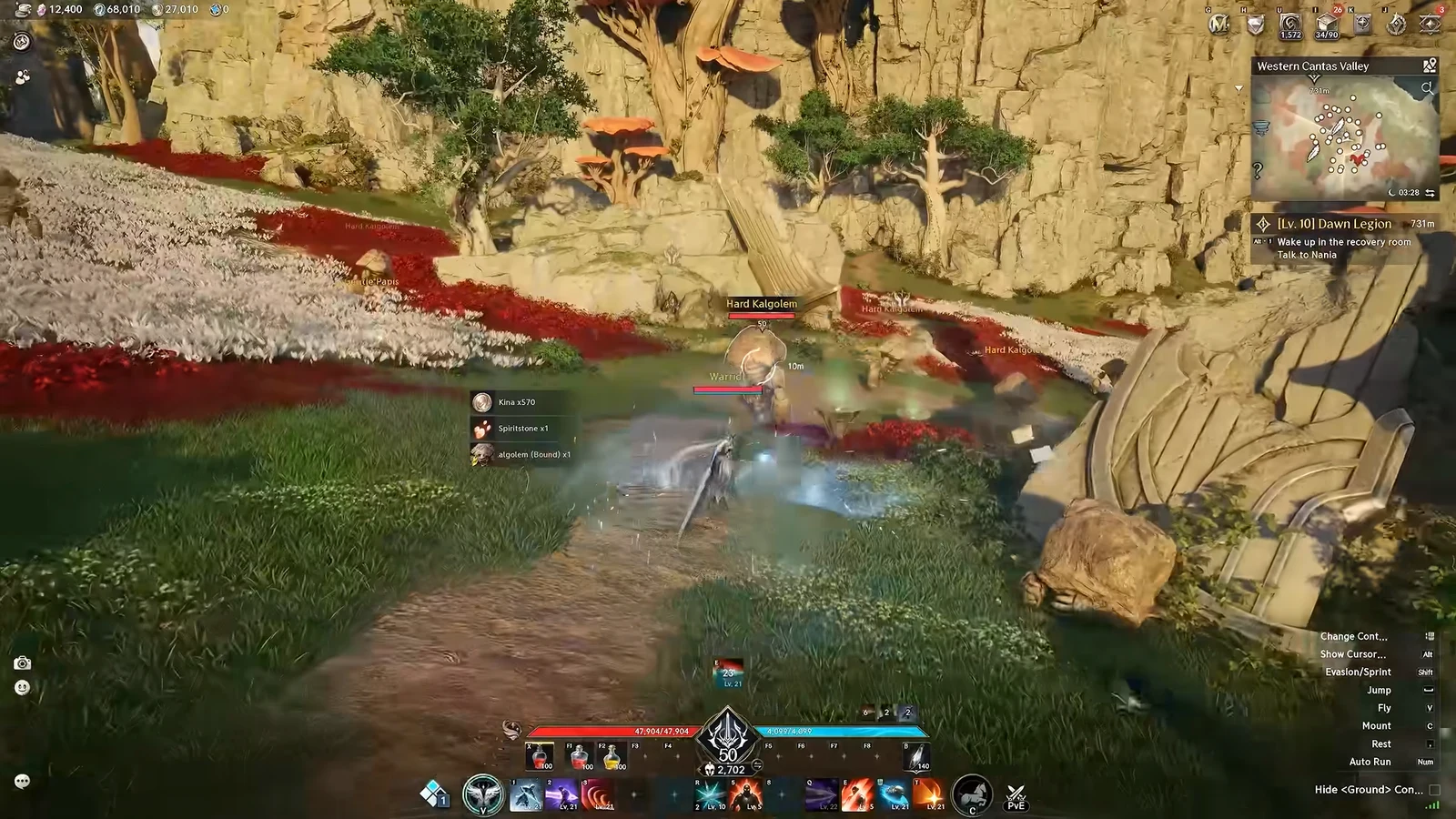
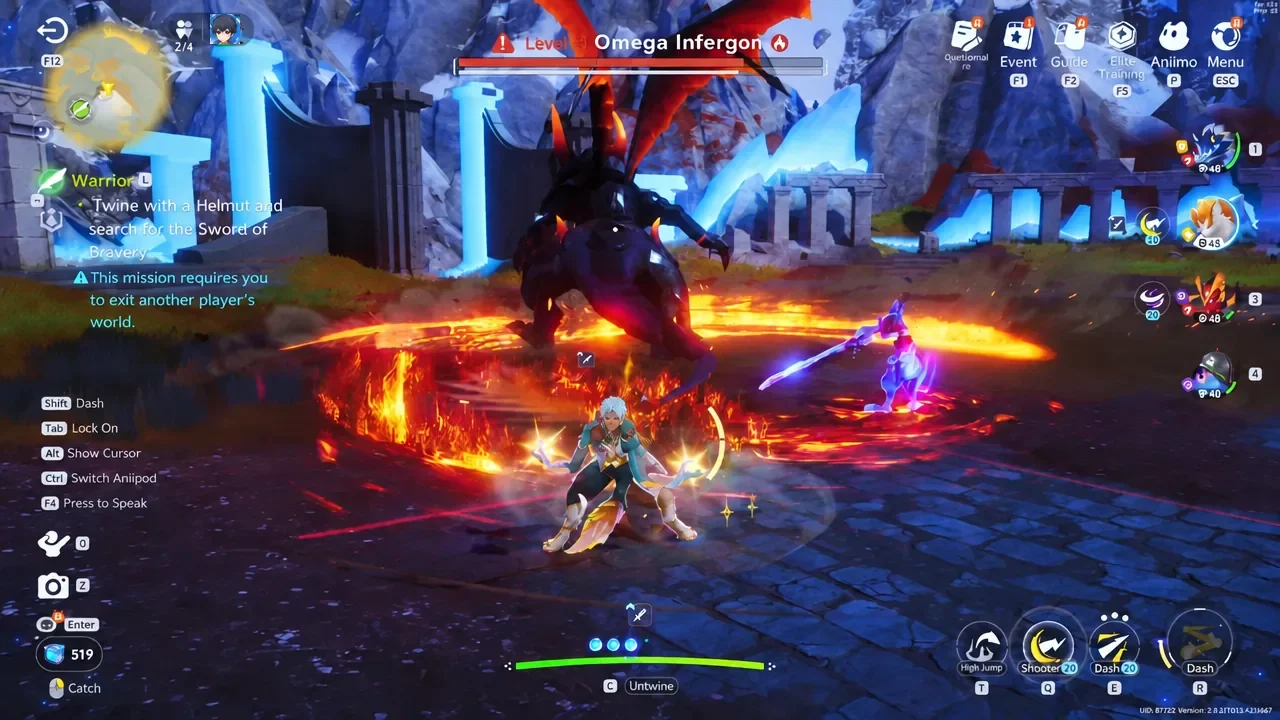
Boss fights are the one part of Aniimo that gets dramatically easier with company. Alpha and Omega creatures hit hard, cover the arena in hazards, and soak far more damage than a solo roster comfortably handles. Co-op solves that, but it comes with a catch that trips up most groups on their first run: the world belongs to the host, and not everything a guest does follows them home.
Quick answer: Invite up to three friends into your world, beat the boss together, and open the victory chest yourself. Loot and catches are per player, but quest and world progress saves only for the host.
Who keeps the boss loot in Aniimo co-op
Treat a session as a shared combat layer rather than a shared save file. Fighting, catching, and looting happen for everyone in the instance. Story steps, waypoint activations, and one-time world objects resolve for the host and nobody else.
| Activity | Host | Guest |
|---|---|---|
| Boss damage and combat | Counts | Counts |
| Wild and boss catches | Own roster | Own roster |
| Chest and gathering loot | Yes | Yes, if nearby |
| Quest step completion | Saves | Must repeat at home |
| Waypoints and portals | Unlocks | Not carried over |
| Main story quests | Solo only | Solo only |
That single rule decides how you should organize a farming session. If the boss you want is tied to a quest or a region unlock, put the player who still needs it in the host seat. Everyone else joins down and helps, then runs their own version later. If the boss is a repeatable world encounter, the host seat matters much less, because the drops land in each player’s inventory.
Rotate the host seat between runs rather than always defaulting to the highest-level player. Four passes with a different host each time gets four accounts through the same objective.
Set up the party before you send the invite
Multiplayer opens after the introductory stretch in Starfall Valley, once you have learned catching with Aniipods and the Twining mechanic and completed ‘The First Twine’. Until then the social menu stays closed. You also cannot bump into strangers while exploring, so every co-op session starts with a deliberate invite.
- Four players per world, host included, not four guests plus a host.
- Both accounts must be on the same regional server, or the invite will not connect.
- Cross-play works across PC, PS5, Xbox Series X|S, and mobile.
- Roster slot order matters, so move your intended boss-killers to the front before joining.
- A stable connection on the host side keeps Twine combat from rubber-banding.
How to invite a friend to your world
Pick two Aniimo that cover damage and BREAK
Elemental counters do more work than raw levels against a boss. A Fire DPS is dead weight against something that shrugs off Fire, and the game will tell you so with a prompt noting that you did not cause much damage and should enhance your Aniimo or pick another one. Take that message as a signal to swap, not to keep swinging.
| Aniimo | Element | HP / ATK / DEF | Highest-power skill |
|---|---|---|---|
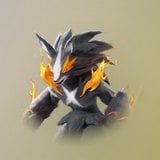 Scorchhowl Scorchhowl | Fire | 95 / 119 / 80 | Falling Star (170) |
 Fulmintis Fulmintis | Electric | 99 / 130 / 66 | Thunder Lance (180) |
Scorchhowl is a stage 3 Fire DPS that evolves from Flameruff and lives around Beast Fang Ridge, in the Breezy Plains region. Its kit mixes Fire pressure with off-element options like Lightning Kick and Pebble Kick, which gives it something to do when a boss resists Fire outright.
Fulmintis is a pure Electric DPS evolved from a Wisptis, built around blade attacks and a single heavy finisher. It trades defense for attack, so it works best as the second Twine in a rotation rather than the form you park in front of a boss.
Boss fight roles: Breaker, DPS, and Twine rotation
Four players attacking the same target is not a strategy. The efficient version splits the job. One player commits to high-BREAK abilities to stagger the boss, and the rest hold their heaviest Twine combos for the vulnerability window that opens when it topples. Skills tagged BREAK, like the Wind-element High-Speed Air Blade, exist specifically for that job.
Save the cinematic ultimates for those windows rather than firing them the moment they light up. A charged finisher landing on an unstaggered boss is a large fraction of your damage spent on nothing.

Twining gives you a fresh health bar based on the creature’s stats, which is why long fights are built around swapping forms rather than healing. When the form you are wearing is in trouble, Untwine and bring out the second one while a teammate holds the boss’s attention. Rotating in and out keeps at least one player applying pressure at all times.
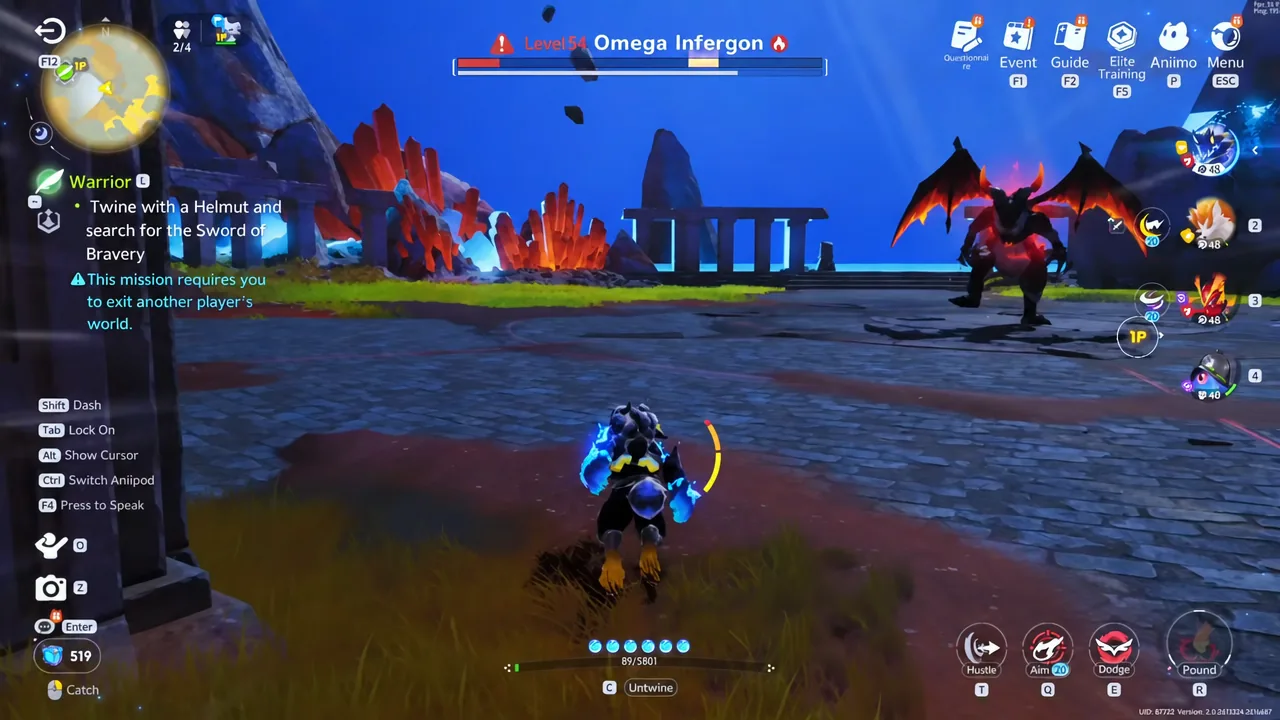
Your Pathfinder is far more fragile than any Twine form and faints after five hits. Some boss attacks target the player directly, so do not stand in the open while deciding which creature to send out next.
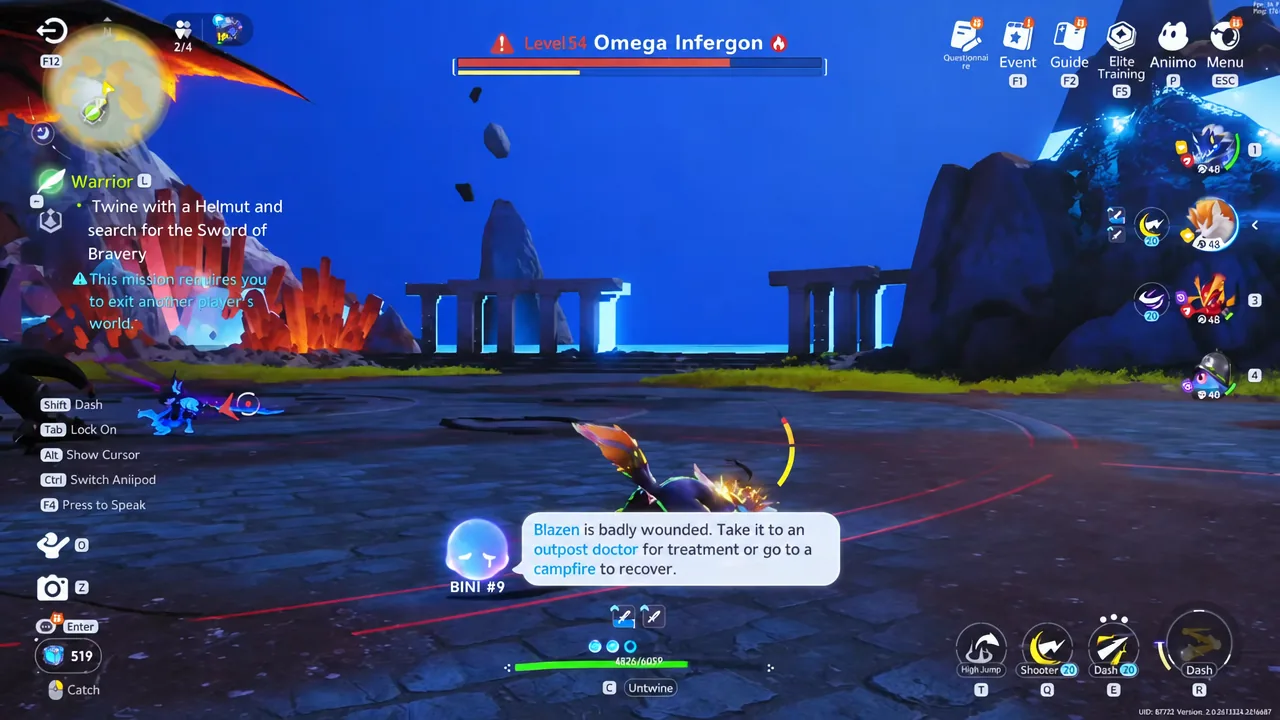
A creature that takes too much punishment comes out of the fight badly wounded and needs treatment from an outpost doctor or a rest at a campfire before it is useful again. Plan for that before a farming loop, because a wounded front-slot Aniimo means the next run starts a member short.
Arena mechanics that end runs early
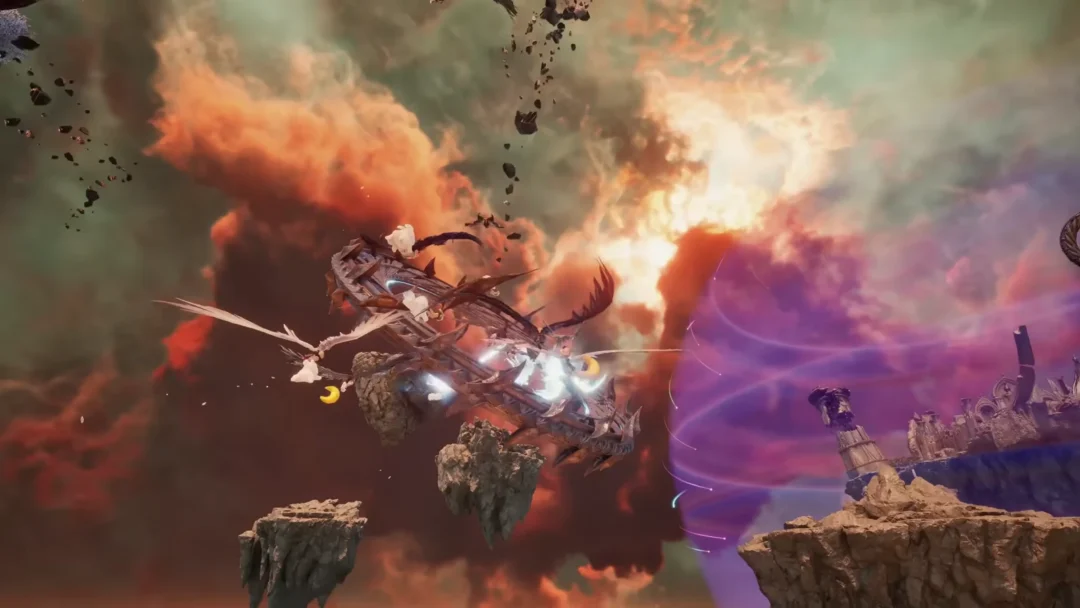
Big bosses use the arena against you, and the fight against a Level 54 Omega Infergon is a clean example of the pattern. Partway through, a warning announces that its Fire Elemental Crystals are about to explode, with instructions to shatter them to create a safe zone and avoid the blast. If your group cannot break them in time, the fallback is cover, and the fight repeats that phase more than once.
Assign the crystals to specific players in advance. The worst outcome is all four people committing to the boss, missing the window entirely, and eating a field-wide detonation that wipes the run right as the health bar gets interesting.
Boss health scales with the party, and it adjusts again if someone drops out mid-fight. Finishing with a full squad is still the better outcome, since the group keeps its damage and its Breaker.
Capturing the boss and opening the victory chest
Agree on a capture plan before the fight, not during it. Decide who wants the creature, who stops attacking, and at what point the throws start. A boss can die faster than a late call, and then nobody gets it.
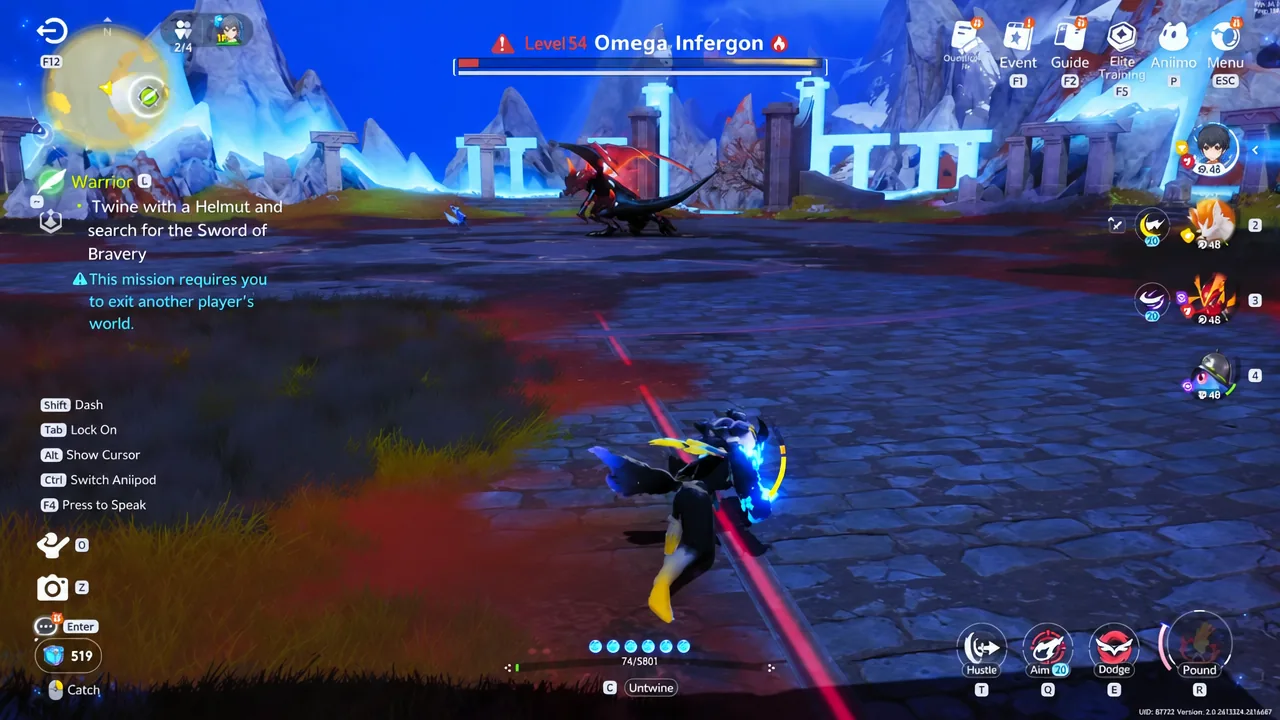
That Primegy cost is the real limit on how long a farming session stays worthwhile. Budget it across the bosses you actually need materials from instead of opening everything you happen to walk past.
Rewards you can only farm with other players
Some of the game’s collection is gated behind co-op outright. Fulmintis and Dazmand can only be captured inside another player’s world, or acquired by trading for them. If your Aniilog is missing either one, a session in a friend’s world is the requirement, not a shortcut.
Three Sanctums also need two challengers rather than one, and all three offer automatic team fill from the entrance, so you can queue for a partner instead of maintaining a permanent duo. Between them they hold 14 chests.
| Sanctum | Region | Chests |
|---|---|---|
| Chasing Stormwinds | Berylline Causeway | 4 |
| Flaming Wings |  Sea of Flowers Sea of Flowers | 5 |
| Courageous Wit |  Zephyrus Landbridge Zephyrus Landbridge | 5 |
Social systems fill out the rest of a session. Visiting another Pathfinder’s Home lets you till their soil for a share of the harvest and pet an egg in its Hatchinator to shave time off incubation. Trading runs through the friend list rather than an open market, and a higher Affinity Level widens which creatures you can swap, including Alpha, Sparkling, and evolved stages. Friendship changes what is tradeable, not what a trade costs, and a completed exchange locks the creature for 30 days before it can be traded again.
Check the trade screen properly before confirming. Name, form, Potential, personality, and rarity are separate properties, and a matching species icon is not proof you are receiving the copy you agreed on.
Verify the run before you leave the area
The most common co-op failure is a group finishing a boss, assuming it counted for everyone, and discovering later that only the host banked it. Confirm before you fast travel away, while the encounter can still be repeated.
- Chest reward: look for the reward toast and an inventory change, not just the opening animation.
- Boss catch: each player confirms the creature independently in their own roster.
- Quest step: if the objective text did not advance in your journal, assume you still owe it at home.
- Waypoint: open your own map later and check it is activated there too.
- One-time pickups: check your inventory immediately rather than trusting the pickup animation.
Staying near the host matters for all of this. Guests need to be within interaction range when chests open and objects are gathered, so a host sprinting three rooms ahead is the fastest way to leave someone empty-handed.
Played that way, a co-op session multiplies rather than duplicates. A single route can cover a needed Alpha, a handful of wild catches for each player, a chest cluster, and a duo Sanctum, all of which land in individual inventories. Replaying a long host-only story quest four times over is the one thing co-op is genuinely bad at, and it is worth planning around rather than discovering halfway through the evening.