
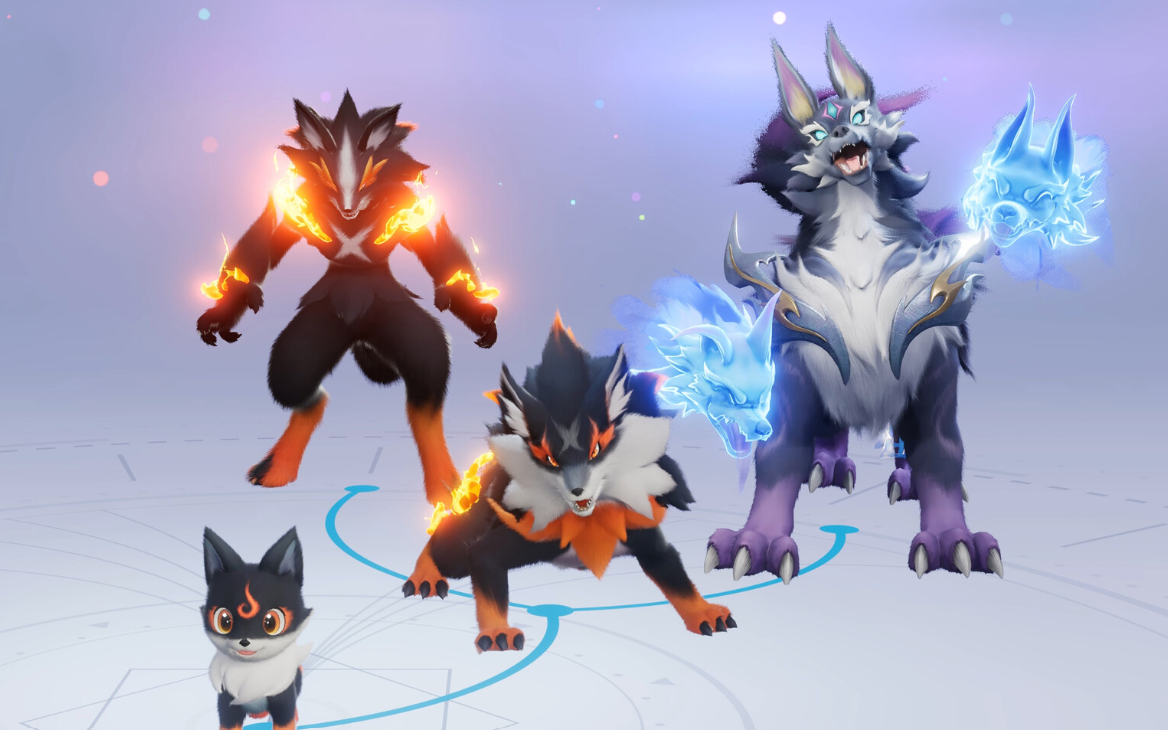
All three games start the same way. You spot a creature, throw a device, and add it to a growing collection you learn to read by element and role instead of looks. The split happens after the catch. Aniimo hands you the creature’s body to explore and fight with, Palworld turns your creatures into workers and weapons inside a survival sandbox, and Pokemon keeps the focus on building and commanding a battle team.
Quick answer: Pick Aniimo for free-to-play, cross-platform action combat and Twining, Palworld for survival crafting and base automation, and Pokemon for a premium turn-based team-building RPG.
The core differences between Aniimo, Palworld, and Pokemon
The three games sit in different genres even though they share the collecting hook. Aniimo is a free-to-play open-world action RPG. Palworld is a paid survival-crafting game. Pokemon’s mainline entries are paid turn-based RPGs tied to Nintendo hardware.
| Feature | Aniimo | Palworld | Pokemon |
|---|---|---|---|
| Price | Free-to-play | Paid, one-time | Paid, one-time |
| Combat | Real-time, Command and Twine | Real-time shooter | Turn-based (Scarlet/Violet) |
| Evolution | Lumin, Gamma, Nova stages | None | Evolution chains |
| Base | Homeland and RV | Open-world automated bases | None |
| Online | Required | Optional | Offline capable |
Aniimo launches on September 16, 2026 for PC and consoles, with mobile following on September 23. It runs across Steam, Epic, PlayStation 5, Xbox Series and Cloud, iOS, and Android, which makes it the widest-reaching of the three. Palworld has been in early access since January 2024 on PC and consoles, and Pokemon remains a long-running Nintendo series.
Aniimo is online-only, with broadband listed in its minimum requirements. There is no offline mode, unlike Palworld’s single-player option and Pokemon’s fully offline play.
What all three games share
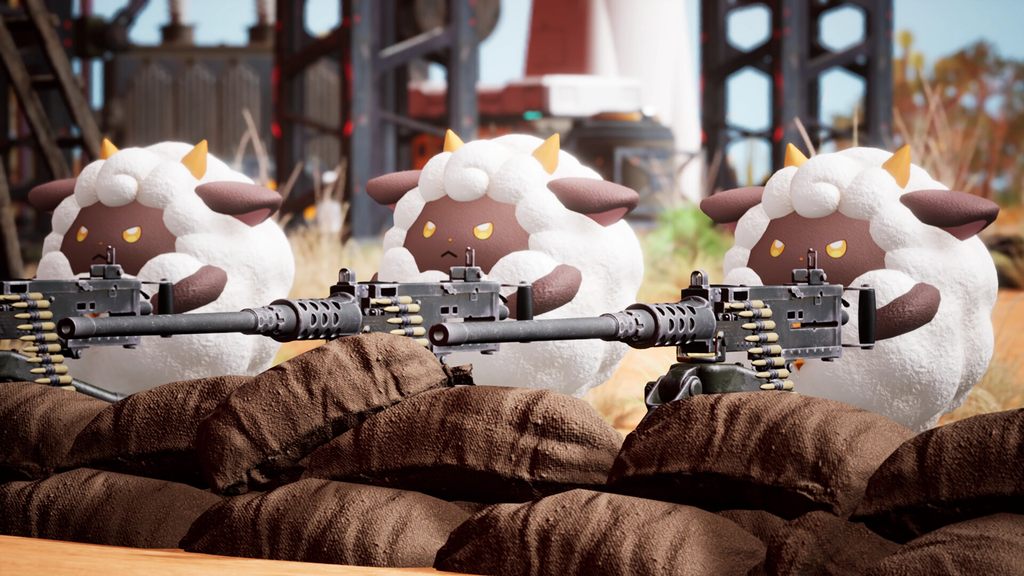
The appeal is the same across the board. You hunt for creatures, add them to your collection, and figure out what each one is good for. Every one of them rewards looking past a creature’s design to its skills, its element matchups, and how it fits your wider plans. Catching a second copy of something you already own can still be worth the detour, though the reason changes from game to game.
What each game does with that new catch is where they part ways. In Aniimo, a movement ability can open up parts of the map. In Palworld, the right worker clears a production jam. In Pokemon, a new teammate reshapes how you handle a fight. The capture devices, an Aniipod, a Pal Sphere, and a Poke Ball, fill the same basic role, but the payoff differs.
Twining is Aniimo’s headline mechanic
Twining lets you take direct control of an Aniimo, using its body, movement, combat skills, and point of view. It is not a mount or a temporary buff. It runs through the game’s normal fighting, traversal, and exploration, so a new catch can change how you approach an area even if it never becomes your main attacker.
Many creatures carry a pathfinding ability such as Fly, Swim, or Climb, which only matters because you can become them. That turns your roster into a practical exploration toolkit rather than just a battle lineup.
The closest points of comparison elsewhere are partial. Palworld’s mounts and Partner Skills give you creature-specific movement and utility, and Pokemon Scarlet and Violet’s Indigo Disk DLC includes the Synchro Machine, which lets you experience the world through a Pokemon. Both are useful reference points, but neither is woven into the whole game the way Twining is in Aniimo.

Combat is the biggest adjustment
Aniimo runs two modes. Command Mode directs your companions, and Twine Mode puts you inside one of them. Positioning, dodging, skill timing, and switching between kits all become your job. Two terms matter most here. EP (Energy Points) is the resource you spend on active skills, so learn how each creature recovers it. Break is pressure against an enemy’s poise that opens a window when its resistance gives way, and it also helps with catching.
A strong team needs more than raw attack. Think about who creates openings, who capitalizes on them, and who provides healing or protection across the game’s roles.
Palworld puts your character in the fight alongside your Pals, using your own weapons. Gear, positioning, and supplies matter as much as your creature choice, which means a bad encounter might be your equipment failing you rather than your Pal lineup. Pokemon’s mainline battles stay turn-based, built around move selection, prediction, switching, and team construction. Physically dodging an attack is not part of that system.
Do not treat Aniimo’s EP like Pokemon’s PP. EP is a combat resource you cycle during a fight, closer to mana or stamina, while PP tracks how many times a move can be used before it needs restoring.
Catching, evolution, and base building
Catching
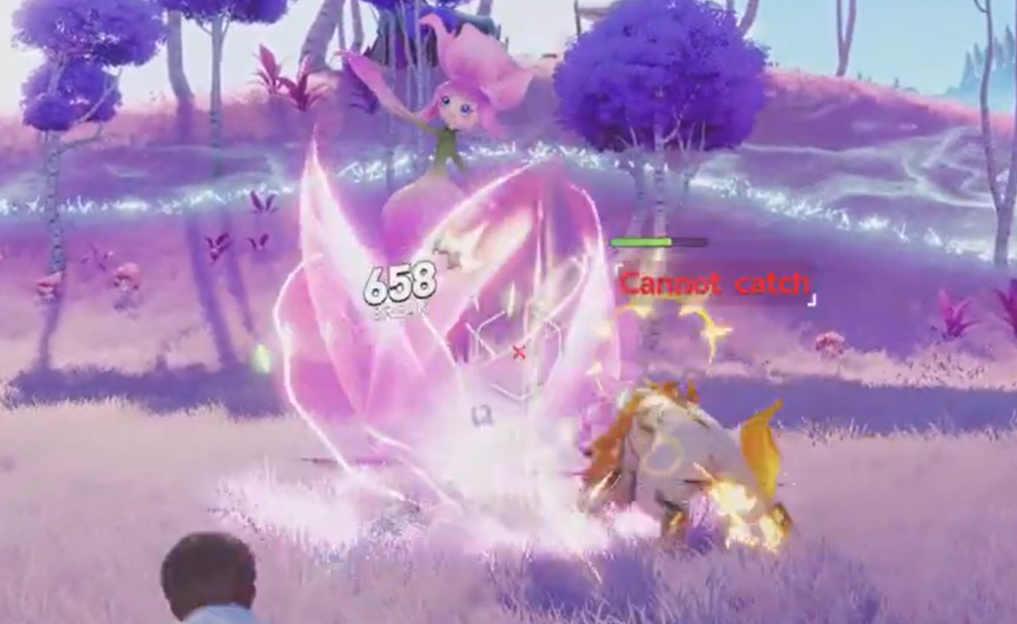
In Aniimo, you observe a target and wait for a favorable moment. Stealth, sleeping targets, Break damage, the right pods, traps, and capture progression all improve your odds. Palworld’s captures happen mid-action, where your approach, the target’s condition, and your Sphere choice all count while you keep control of the fight. Pokemon Scarlet and Violet move a wild encounter into the battle system before you throw a ball, while Legends: Arceus and Legends: Z-A let you aim throws in the field, closer to Aniimo’s hunting.
Evolution
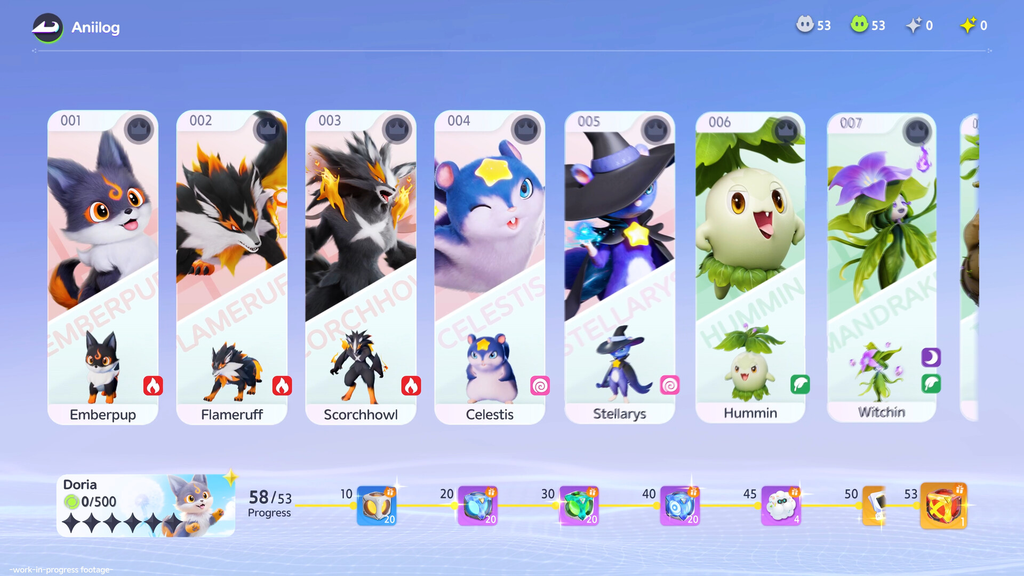
This is where Aniimo lines up with Pokemon. Aniimo creatures develop along evolution routes with species-specific requirements, moving through Lumin, Gamma, and Nova stages, and some lines branch. Check a species in the Aniilog before spending rare materials, since a route can involve more than hitting a level and different branches lead to different roles. Palworld has no evolution chains at all; a stronger Pal comes from training or breeding, which is a separate process from turning one creature into another species.
Base building
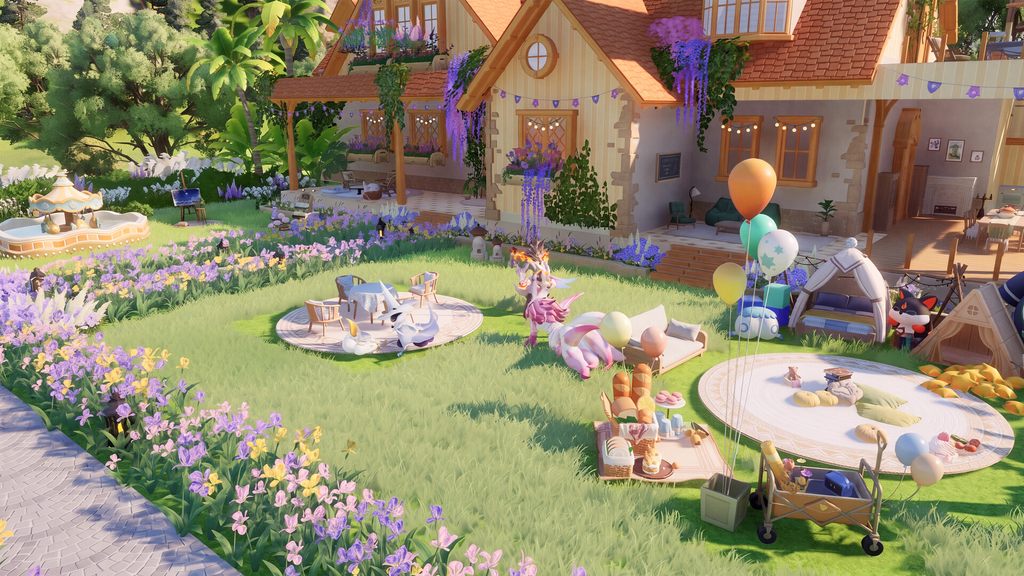
Here Aniimo shares more with Palworld. Aniimo’s Homeland covers farming, facilities, worker assignments, crafting, and RV activities, running as a personal instanced home. Palworld pushes base building into its survival loop, where assigning Pals to production keeps your operation alive and expanding. A creature’s work abilities can matter as much as its combat stats in both. Pokemon’s mainline and Legends RPGs have no comparable staffed production base, so if making a home productive is part of the fun, that points toward Aniimo or Palworld.
Which one should you play
The clearest way to choose is to think about what you want to do between catches. If exploring the world through a creature’s movement and skills sounds like your ideal night, Aniimo’s Twining and Homeland are the draw, and it costs nothing to start. If half the appeal is a base that runs better every session, Palworld’s survival and automation loop leans your way. If you want the familiar rhythm of refining a battle team, Pokemon delivers that, with Scarlet and Violet for the turn-based open-world route, Legends: Arceus for field research and active catching, and Legends: Z-A for real-time command battles.
Aniimo carves out a lane the other two do not fully occupy: free, cross-platform, open-world, and action-first, with a numbered roster to complete. You can grab it on its Steam page to see the platforms and get started. Whichever you land on, the real difference is not that they all put monsters in a ball, it is what happens once the ball is full.